14. What time is dinner?
I’m really privileged that I get to spend so much time with my kid. And I love it. Almost all of it. Almost…
The bit that I don’t enjoy: getting into the second hour of trying to convince an infant he really should be sleeping when he’s standing on my face to try and reach the big picture above the bed that he’s not allowed to touch, let alone slap repeatedly. I think of my dinner downstairs ready to go. I wistfully contemplate the bottle of vermouth in the fridge that will taste oh so good over some ice with an olive and slice of lemon in it.
And here I am, feeling like I’m trapped in a version of snakes and ladders. The game’s goal is to get to a point where you have a sleeping child upstairs with two happy, relaxed parents downstairs having dinner together. You cling hopefully to the ladders: he’s started sucking his fingers! It’s a sure sign! He’s rubbing his eyes! There’s a yawn! Then you hit a snake with brutal force as he stands up, starts shouting and climbs off the bed to go and find a drawer he can unpack. It’s 8pm, he really should be at least an hour into sleep right now….
Let me rewind a little bit. We’re nearly through the first year. He’s doing great and we’re all loving family life. What we don’t have is much of a fixed routine. As two full-time parents currently, we don’t have to be up and out at a fixed hour, and each day can look very different. Despite this, he’s not a bad sleeper in general, but getting him to sleep is not always a linear process – it is instead the snakes and ladders of a game whose board gets fiendishly rearranged every night. In this world of unpredictability a big dilemma: when do we eat?
There are many studies which say that family meal times are really important for a child’s emotional development and for the development of their eating skills and habits. We do breakfast together, and often lunch together. But he eats his last meal of the day around 5.30pm so that we can try and hit a bedtime between 6.30 and 7pm. It’s not only a bit early for any kind of civilised dinner, it’s often the start of the nightly snakes and ladders game.
Those snakes on the board are grown during the day. This is where our lack of a fixed routine creates unpredictability. At 5pm when we’re starting to think about the transition from day to night, we could be in any one of a number of situations: he might have napped perfectly, he could have just woken from a late nap, or on some days he has not slept at all since breakfast. If it’s one of those days with no naps, you’re in the tricky territory of trying to feed him when he’s showing some sign of calming down, but not too late that he’s going to get really tired halfway through the meal. On these days, many a dinner time ends with a tired child rubbing his food-caked hands in his eyes as he yawns, triggering tears, a struggle to clean him up and a quick call on whether he needs a bath before bed. This is why we don’t currently eat our dinner with him – it can be traumatic enough on its own, we don’t need to compound that with the disappointment of knowing the perfectly textured rice has gone cold and won’t respond well to a quick reheat in the microwave. So instead of eating with him at 5.30pm we try and join him at the table for a version of aperitif hour (where the snack is often the food he’s thrown onto the floor).
Instead let’s assume it’s been a day of model naps – maybe even the jackpot of a single nap of at least 90 minutes almost exactly situated between the time he woke up and target lights out time of 6.30pm. You’ll be feeling pretty good on a day like this. His dinner is right on time at 5.30pm, he eats, you clean up. Bath time is quick but painless. Teeth brushing is never painless but it’s over in moments when you only have eight teeth and there’s no more than a smear of toothpaste to be sucked off the brush.
Right on schedule you’re taking him to bed, and the bottle enters his mouth at the optimum time of 6.25pm. The ladders have been replaced by super-fast, sleek and silent lifts, whisking you ever higher to your destination. The final challenge is when you have to uncouple yourself without him waking, transfer him to the cot – anxiously hold your breath for the thirty seconds it takes to see if he’s settling – and if he is you float downstairs to the kitchen in a cloud of smug satisfaction, and anticipation of a great dinner with relaxed conversation and minimal throwing of food.
The bad days are the ones with all the snakes. Still wide awake after he’s finished his bottle. A story turns into a battle to stop him ripping the pages out of the book (although if it’s a Peppa Pig story then I’m happy to let him). He decides to tour all the things he’s not allowed to touch in the bedroom – reading glasses on the bedside tables, glasses of water, anything with a plug, sockets… the correlation of his interest level to inherent danger is strong. He goes to the shutters and repeatedly opens and closes them, which on these hot summer nights means he’s letting in the heat of the sun and flooding his eyes with sunlight, which is probably not going to help him get sleepy. You’ll think you have sight of a ladder as he rubs his eyes, or his fingers go to his mouth to suck. Maybe he’ll do this and roll over a few times and your hopes rise as this is often his final action before sleep. But he keeps rolling to the edge of the bed, springs up and smiles at you. It’s a cute smile, laced with the knowledge he’s doing exactly the opposite of what you want right now.
Landing time at the top of the board can come anywhere between 6.45pm and 9pm.
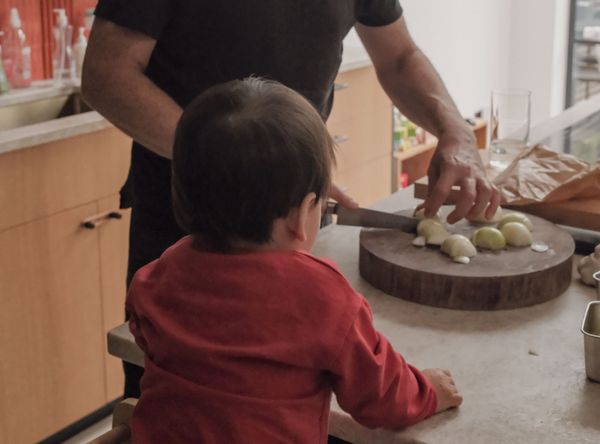
If this sounds bad, I should say that to the extent it’s a consequence of our unstructured routine, then that does also come with positives. As we’re not working to a schedule of naps we can accept any and all invitations and work around them, ensuring we have sufficient nap opportunities. The reality is that he is sociable and curious and thrives in most of these activities. On some days he seems to intuitively figure stuff out and take a big sleep while we’re prepping for guests, allowing us the fun experience of hosting and cooking together. And we’ve had some really great summer evenings where he’s stayed awake and been part of the fun of watching a World Cup game, or chatting with friends in the garden.
But of course he’s one, and so this isn’t consistent, meaning there are days he will decide not to nap at all. It is sometimes completely our fault when the day is just too fun to miss out on, but it happens too when we’re quietly at home, with the ideal nap conditions spurned as he shakes his head to say ‘no, no, no’, and goes to climb the stairs again.
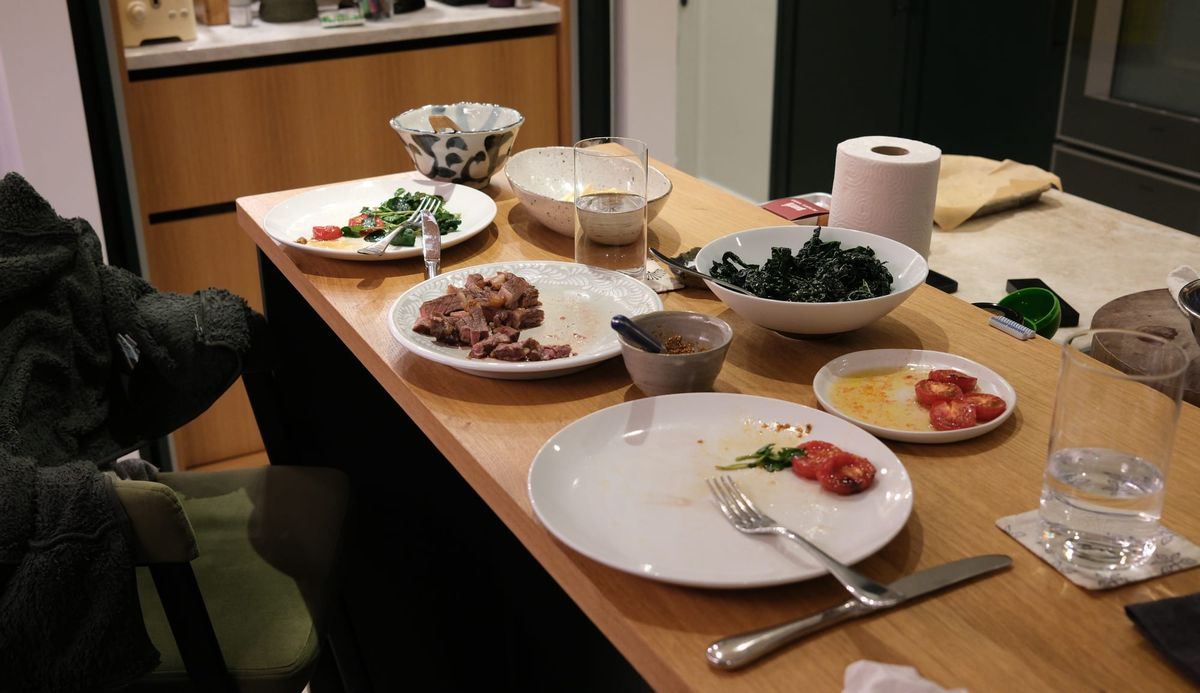
When we hit a challenging bedtime, we roll with it, swapping tasks around. Often I’ll bathe him, then hand him over and come down to the kitchen to get our dinner prepped, tracking progress on the monitor to try and time when I might start heating the sauce, boiling the pasta or tossing the salad. If it’s a day of ‘snakes’ I’ll go and swap in to see if a change of parent can shift the dynamic. The later it gets the further away the ideal of two parents enjoying a civilised dinner together becomes. Hunger forces us to relay between eating and being upstairs with the kid. By the time we’re reunited, we’re drained, sometimes a little broken, with only the cleaning up to do together. If we have the energy we’ll try and review the day to work out where it went wrong, but mostly we’re just too tired by this point and we call it a night, knowing that tomorrow is another day.
It makes entertaining hard – do you invite people to come while he’s awake so they can say hello? Or do you try and start the evening when he’s in bed. The unpredictability of the night time routine doesn’t make either strategy obviously better. Instead we contingency plan around who will stay and host and who will do the bedtime bit.
As I lie on the bed with the room now dark and my son pirouetting across the bed and chatting away, I take comfort that he is getting lots of sleep, just not always in consistent slots. He regulates pretty well and a late night is often followed by him sleeping until 7 or 8am, or waking early with the light, but quickly coming back to bed for a long two hour sleep before the day properly starts.
I try and shush him to trigger the association with sleep that’s hopefully still there from his newborn days. In day four of a bad run I cling on to the idea that this is an expected part of the fabled one-year sleep regression, and the switch to one, longer nap between waking and bed time. We hit a week of illness that throws everything up in the air as sleep patterns, eating and energy levels all start fluctuating wildly. Concerns about our dinner time and food getting cold fade as the care instinct overrides everything else. Fortunately he recovers quickly and is back on form coming into his birthday weekend.
As I’m there on the bed shushing, alternately restraining and trying to cuddle him towards sleep, I try to quell my growing irritation by reflecting on how parenting really is an exercise in patience, meeting your kid where they are at, and trying to find the best moments in every stage you’re in. If that means a few ruined dinners, I can rest easy knowing that there will be many more to come.
He’s asleep, but too restless to risk moving him to the cot. I head downstairs and put on the monitor. It’s 9.30pm. The evening has gone. I’m exhausted and soon I’ll be heading back up there to join him.