11. Heat
We’re deep into the heatwave. There were a few days of respite at one point, but the whole month has seen our daytime temperature around or above 30º and nights rarely dropping below 20º. Tropical nights, they call them. The days of greeting an impending heatwave with a ‘wahey’ and quick coordination of maximum outdoor exposure seem far in the past.
The old heatwaves were fun – brief enough to sweat through knowing that cooler temperatures and the chance for recovery were rarely more than 48 hours away.
But this. What’s a cook to do? What is the father of a 10-month old to do?
We live in a converted period house. A house designed and insulated to retain heat in the winter, with a box stuck on the back, predominately consisting of glass on its eastern and southern sides and its roof. When the sun shines, we’re destined to be hotter inside than out.
Of course these are high-class problems compared to people who have no outdoor space and no cooling. But when you’re looking after an infant, the problems are no less real as we try and keep him entertained whilst staying out of the sun and minimising activity in the heat.
We are massively fortunate to have a portable a/c unit that gives us cooler nights and – after being lugged downstairs – one cool room during the day. But the kitchen is too big for it to impact. Passive shading – blinds and awnings outside to stop the sun hitting glass – has helped get us to parity, the same temperature inside and out. Each day I roam around with my kitchen thermometer. “It’s 0.5º hotter outside, keep the windows shut, don’t be fooled by the breeze” and finally the relief of “OK, it’s 1.1º cooler outside, open all the windows and doors!”
On the hottest days cooking is cancelled both by my own lack of energy and a desire to avoid adding any heat to the house. I have to grit my teeth to boil the kettle and make formula, and worry about switching on the steriliser and seeing its tiny quantity of steam add to the heat and humidity inside.
But we still need to eat.
A family birthday party was an excuse to fire up the grill and cook outside. The crowd was big enough for me to cook two lamb shoulders, boned out and flattened. A sauce of apricot and onion cooked on the grill and then blitzed with smoked paprika and sherry vinegar. Another of herbs, capers, olives and lemon. The next day I cook a batch of white beans, figuring that the efficiency of the pressure cooker justifies an early morning firing up of the hob for half an hour. We live off leftover lamb, sauces and beans for a few days, and then make a pilaf of the final bits of meat. Its deliciousness justifies the quarter of an hour for which the hob is on.
But mostly we eat cold food. Fruit makes its way into all parts of the meal – watermelon and tomato salad one day, chilled peaches with blue cheese on another. And I make gazpacho – southern Spain’s gift to the world’s great soups and to anyone feeling the heat. Tomatoes, cucumber and roasted red peppers blitzed with bread, onion, garlic, olive oil and a good slug of vinegar. The cool smooth texture plus the acidity of the vinegar make it deeply refreshing.
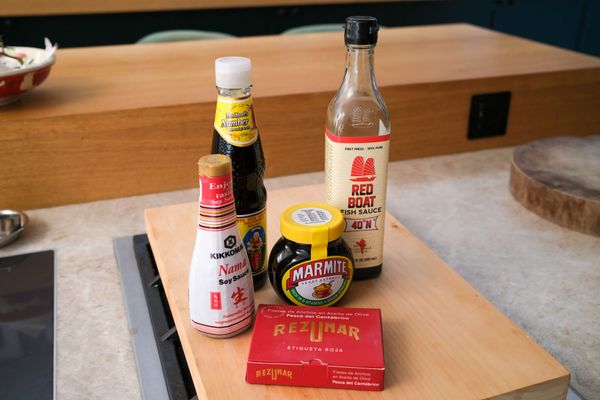
Fortunately the boy likes gazpacho too. He tends to like anything with tomatoes. I have a theory about this, all relating to umami. This taste of ‘savouriness’ is often what makes food really satisfying, by giving that unmistakable but often indescribable depth of flavour. Unfortunately for infants, many ways of introducing umami into a dish are heavy in salt: miso, soy sauce, parmesan. The easiest way to introduce it is MSG and while I’m not averse to cooking with MSG, and often add a dash when cooking, it does contain sodium (about one third the level of an equivalent amount of salt), so has to be used with care, as do many seaweeds.
So how to get umami without any sodium? Mushroom, tomato and nutritional yeast are the best options, and of these tomato is the one that we include most in his diet. It's maybe because the tomato dishes he has are the biggest hits of umami in his diet that he seems to like it.
He guzzles the gazpacho. Maybe it’s the cool sensation. Maybe the umami. Maybe the refreshment of the acidity. It reappears as a spoonful stirred into cooked lentils to act as a quick sauce, and that disappears quickly too.
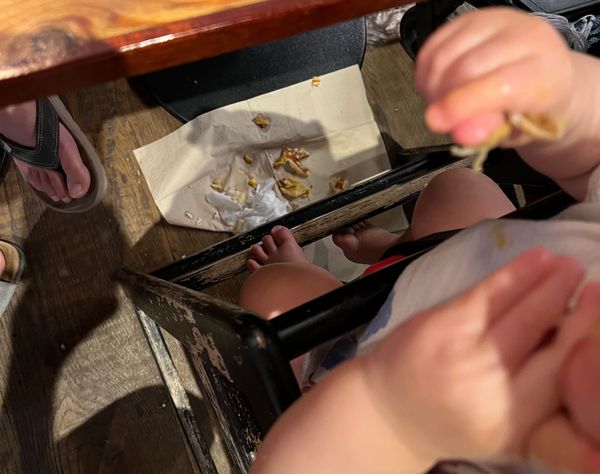
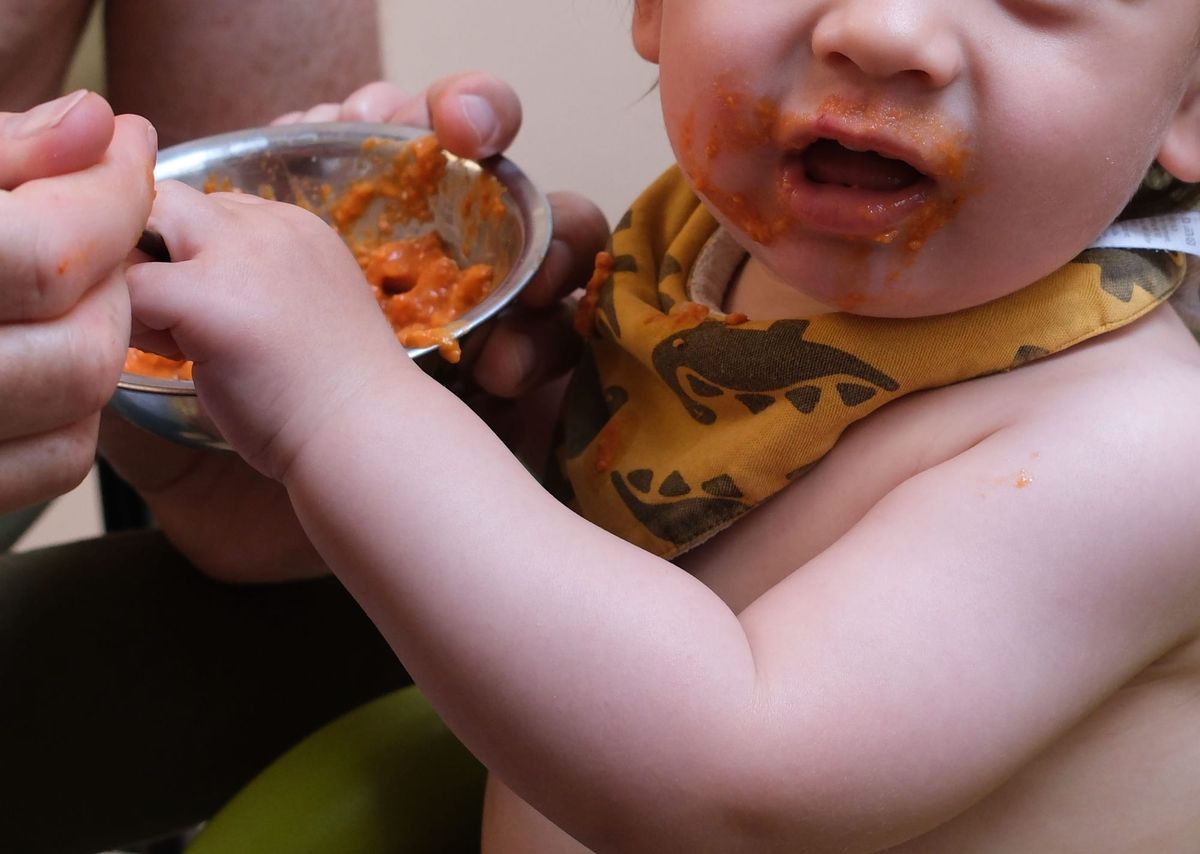
He’s spent most of his time in the house in just a nappy, and several meals have ended with him looking like he’s taken part in that tomato fight in Spain. We often go from the high chair straight to a cool shower to get him clean again.
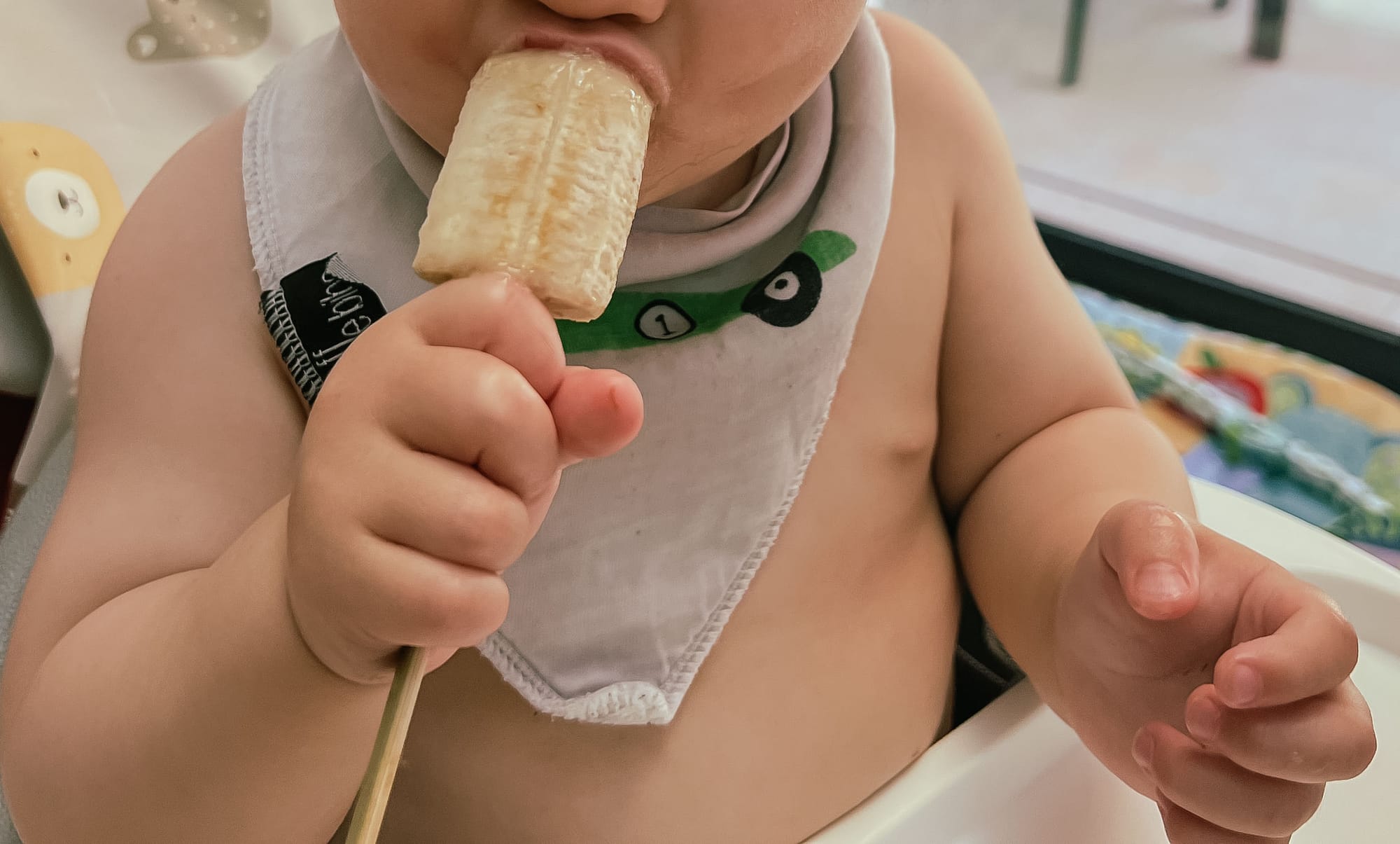
We freeze sections of banana on sticks to give him an alternative to ice cream and these become one of his favourites, and occupy him long enough for the parents to sneak an ice cream without inspiring massive fomo.
As I write, this corner of the kitchen at 4pm is nearly 28º. But we’re starting to get some cooler evenings and turning on the oven or hob no longer seems completely crazy. We start to contemplate clothes again. The sensation of waking at 5am and feeling a little chilly and in need of a sheet to cover us is delightfully novel. Summer is hopefully settling in to a more bearable level. Until then, there’s always gazpacho.
Gazpacho
This is easy to make if you have a powerful blender – a Vitamix or a Nutribullet are great. If your blender is weaker you may get a lumpier texture
• About 12-15 really good tomatoes
• Half a jar of roasted red peppers – some of the Spanish piquillo peppers are low enough in salt to use for an infant but check the labels as some brands are salt bombs
• One third of a cucumber
• A large shallot or quarter of a white onion
• 1-3 cloves of garlic depending on its strength and your taste
• Two slices of white bread or two handfuls of breadcrumbs
• 50-75ml of extra virgin olive oil
• 10-15ml of sherry vinegar or red wine vinegar
Cut the tomatoes in half and remove any green core. There’s no need to skin the tomatoes if you have a powerful blender. Add to the blender jug. Peel off alternate strips of the cucumber skin. Discard the strips of skin (or save them to flavour your water) and add the remaining cucumber to the blender. Half the shallot and garlic cloves and throw them in with all other ingredients except the vinegar. Blend on high power until smooth. If you’re not feeding an infant feel free to add salt, and then add the vinegar to taste. I like to go strong as that is more refreshing, but you do you. If it is too thick you can blend in a little water at this point. Chill really well before serving.