10. The time efficient feeding system
This is a long post full of practical tips for feeding a weaning baby – if you're not currently doing that or about to do it, you may find the level of detail too much!
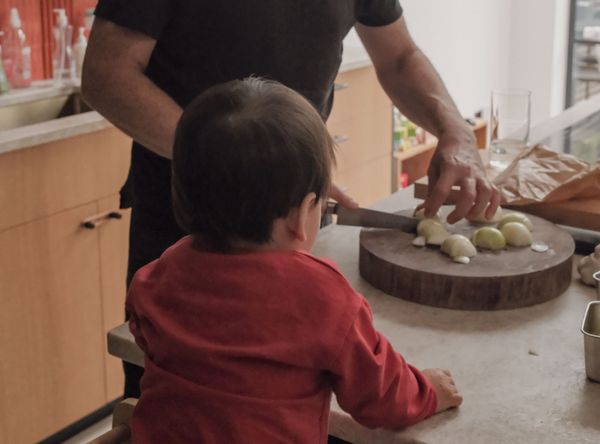
The literal intersection of food and fatherhood is feeding our baby, fast coming up to 10-months old, able to stand, fast up the stairs and becoming totally resistant to daytime sleep.
Apart from stealing a few things from our plates when we’re out, so far all of his food has been made by us, and I’ve now got a system in place which enables us to give him good, home-cooked food in an efficient way, and this post is sharing how I’m doing that in the hope its approach and time-saving hacks will help you prepare food quickly and easily, so you can enjoy the feeding process.
The latest science does show the positive impact of great nutrition across the first 1000 days of life on later life health outcomes – as far as I can see it’s not completely determinative, and many other factors will have a bigger impact on later-life health. But trying to give as good a start as possible is a double benefit of the actual nutrition they benefit from during those first 1000 days as organs are formed and the body and brain develops, as well as building in good eating habits from an early age that will set your child up well for later life.
The aim here is to be able to feed your baby healthy, home cooked food with a balanced menu that is easy to achieve – by which I mean that day-to-day you should be able to make most meals in only five minutes, and this is enabled a weekly long cooking session of 60-90 minutes and one midweek session of probably 30-60 minutes. It also lends itself really well to a division of labour with one parent doing the foundational cooking, and either parent being able to produce a meal quickly.
A few things before we start.
Salt – babies shouldn’t have any material amount of salt, especially when they are under a year old, as their developing kidneys are not yet in a place to process it effectively. We do sometimes give our baby some of our food to taste, but always avoiding very salty items. He also loves bread which almost always has some salt. This small amount of salt he’s getting from these items means we go for near total avoidance in everything else we make so we’re not accumulating too much salt exposure.
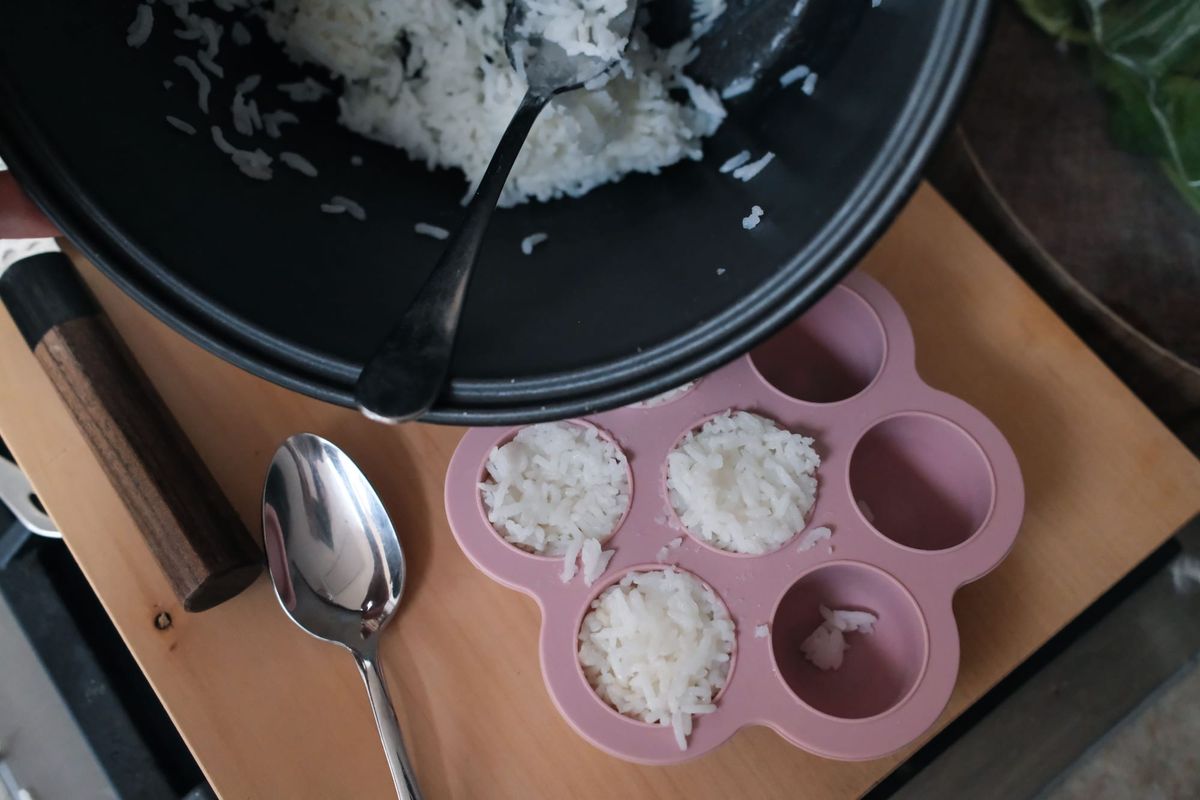
Kit – while generally hesitant to list things to buy for any parents, there are a few things that will make life easier, and this system really revolves around using your freezer. To keep it manageable, silicone freezer trays divided into portions are your friend. These have 30ml compartments, which for a while was a good serving of breakfast porridge, or of rice or lentils as part of a meal. Sometimes he’s now doing a double portion of this at breakfast, so if you don’t want to be cooking all the time, stock up on these. We now have four of the 10 serve trays and four of the seven-serve trays. Make sure you have some tape and marker pens to keep everything labelled.
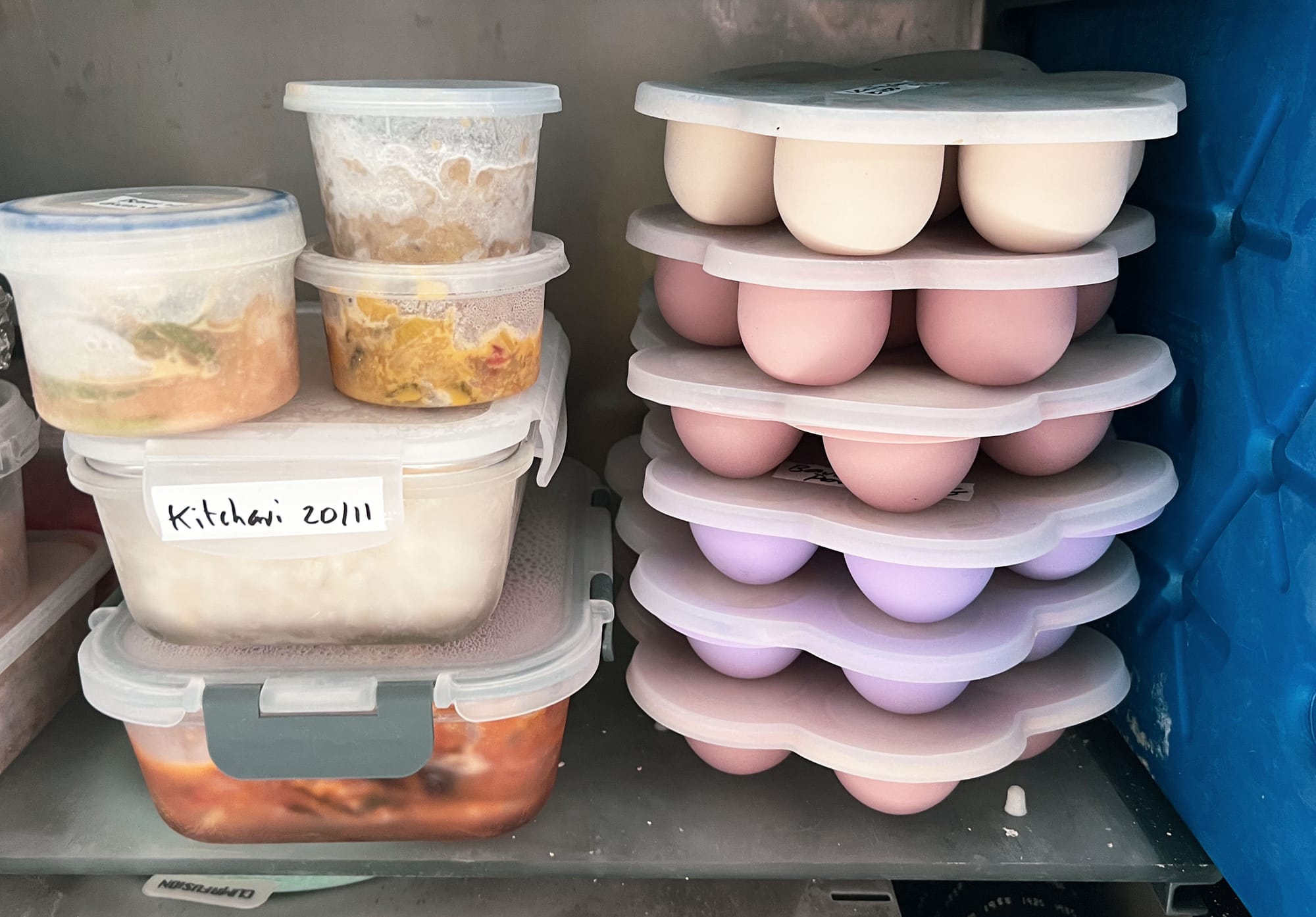
You will always be looking to store small portions in the fridge – we are mostly reusing containers we got for expressed breast milk storage as they have distinctive purple lids and so it’s easy to keep his food identifiable in the freezer. These are also great to take food out and about. Get a small cool bag and freezer pack to keep food cool on the move.
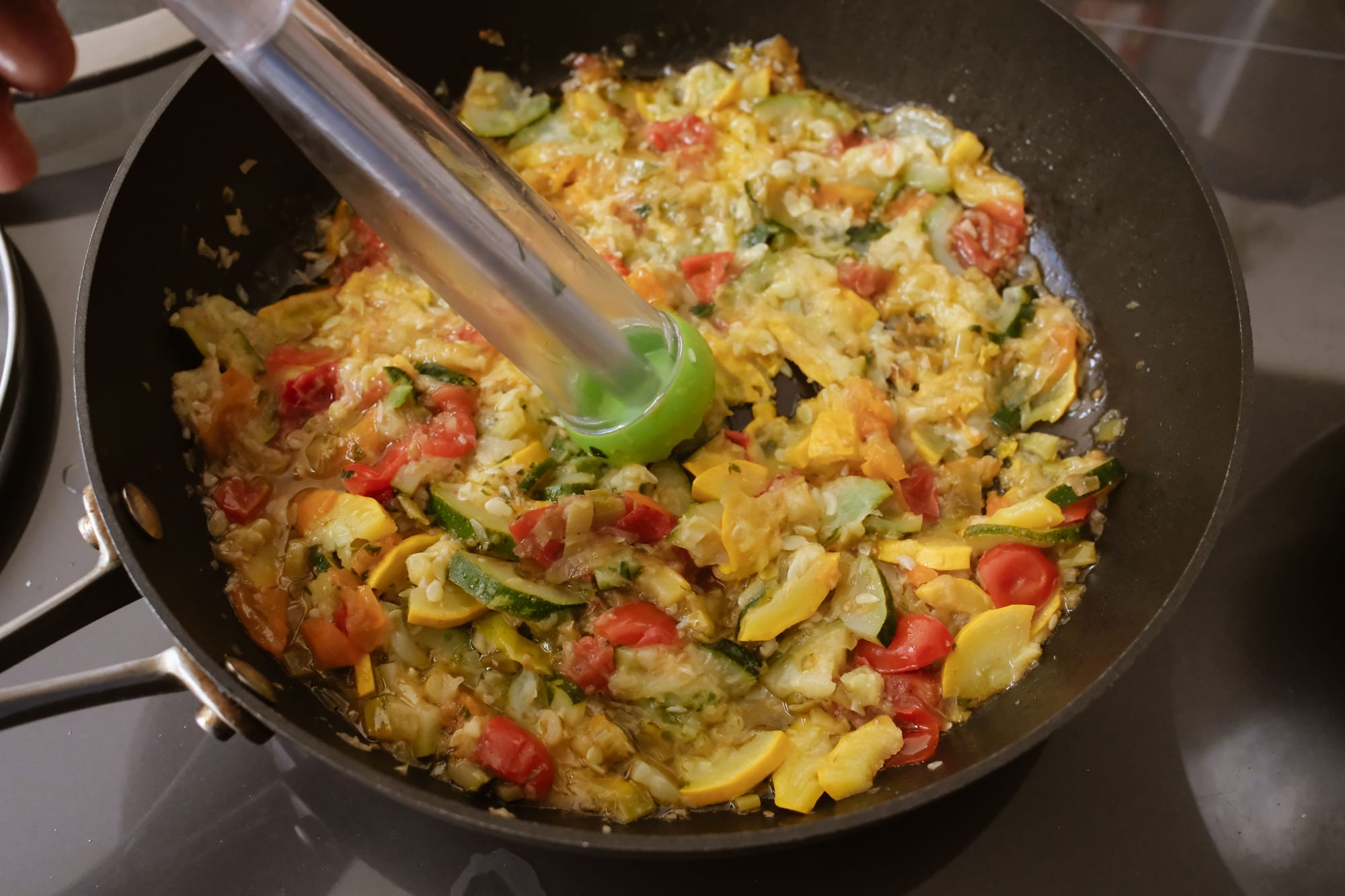
The other useful tool is a muddler stick like those that come in cocktail kits. I have one with quite a wide rubber base, and it’s the easiest way to create the kind of lumpy mashups you want to give them.
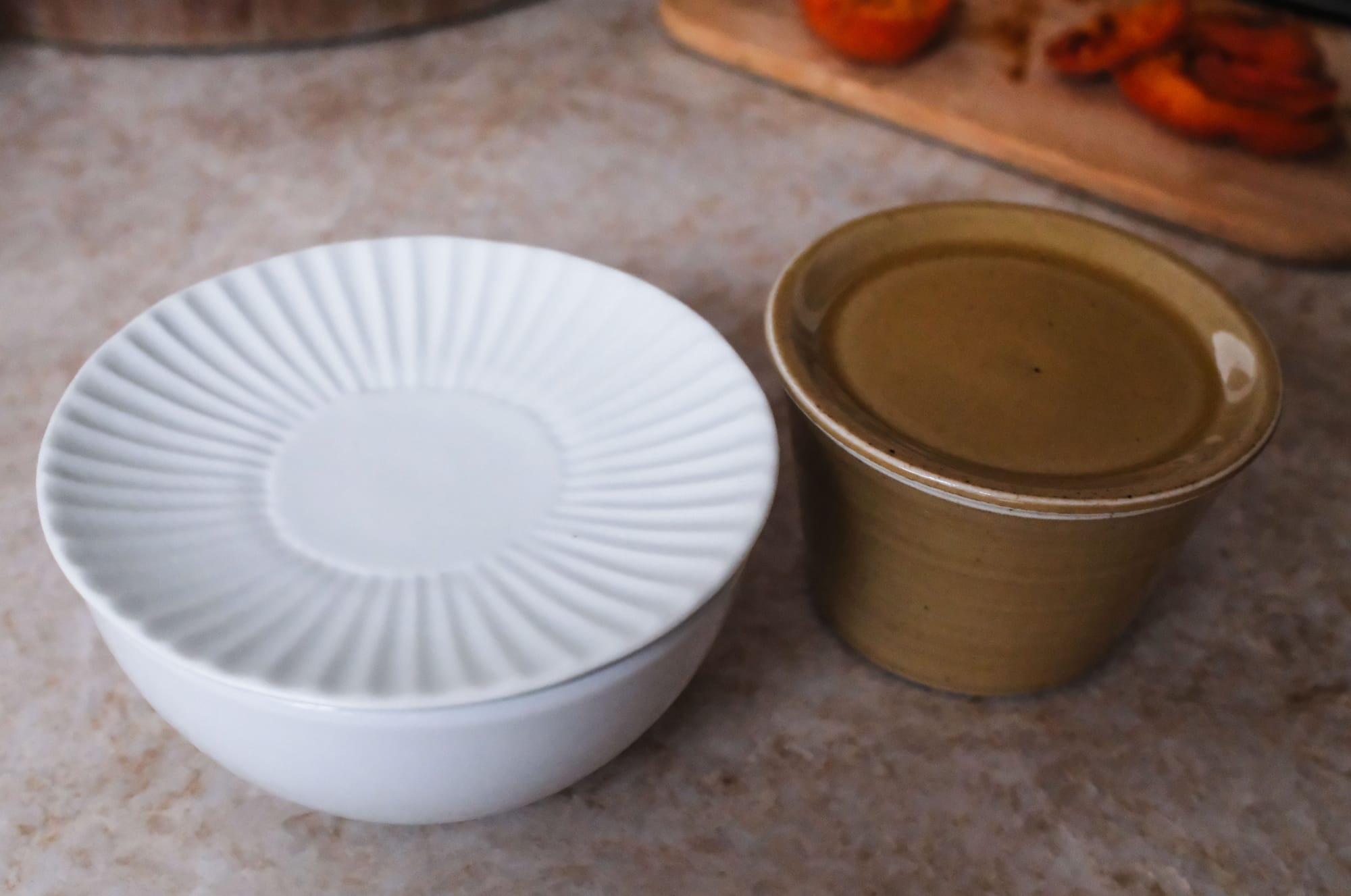
Microwave – alongside the freezer, the microwave makes it all much easier. I think there’s solid evidence that none of us should be putting plastic in the microwave, and certainly you want to avoid it for an infant, so make sure you have some glass or ceramic bowls with glass, silicone or ceramic lids which you can use to microwave food. It’s helpful if these are smallish, given portion sizes, so I found that one saucer we had fitted neatly over our smaller sized bowls. As this combo is almost always in the dishwasher now, I found some cute ones to add to the collection.
Building the Meals
I think about a balanced diet being the mix of what he eats across a few days rather than every mealtime needing a perfect balance. That said, the amount of energy being expended and the growth that’s happening mean that each mealtime needs some carbohydrates (rice, bread, lentils, beans) and some protein (lentils, beans, dairy, egg, meat and fish). For nutrition, making things taste good and getting to the right texture, fat is really important in each dish. Finally I ensure that across the day there is a good amount of fruit and vegetables. The dishes I talk about here can be eaten anytime, but we use them mostly for lunch and dinner, with breakfast being banana porridge and fruit most days, with regular appearances of eggs, usually scrambled, with some vegetables in.
We would all be healthier if we focused on fibre rather than protein. If the fibre isn’t coming from the carbohydrate then we want enough fruit and vegetables being eaten, in addition to oat and banana porridge for breakfast. If you’re a parent you don’t need me to tell you about how much of your life will be spent engaging with your baby’s bowel movements, so getting a good amount of fibre – but not too much – in their diet is important now and will set them up well for life if they can keep that habit.
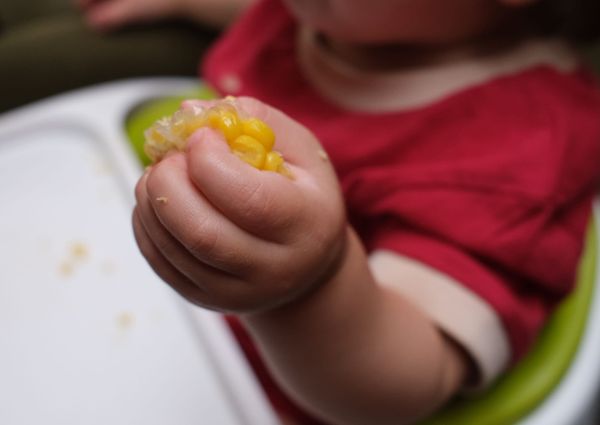
This gives us the building blocks of a dish: the carbohydrate base, the protein, the fat and the vegetable. Mostly we’re focused on each mealtime being a single dish eaten by spoon, with some finger food offered before or afterwards. We’ve found that offering a range of things for him to choose from results in lots of picking at things, a high proportion of food ending up on the floor and getting hungry later, so we tend to offer something for him to pick up and eat while he’s seated and we’re prepping the main dish – cut up fruit while we make the breakfast porridge, or some vegetables while we make the rest of lunch or dinner.
For the main dish, we’re looking for a lumpy, non-uniform texture that doesn’t have anything big enough to be a choking hazard. This is particularly the case for things like peas and lentils and beans, where each individual one should be crushed at least to the point where the skin is broken. Things like tomato skin I now leave in cooked dishes, as long as the tomato was sufficiently cut up that there will be no really big pieces of skin which could be a choking hazard if hard to swallow in one bite.
The Base
The focus here is on carbohydrates with protein where possible. The ones I batch cook and freeze are rice, lentils and beans. With stocks of at least two of these in your freezer you are in a really good place to get quick meals out every day. The fourth regular base is pasta which we cook from dried.
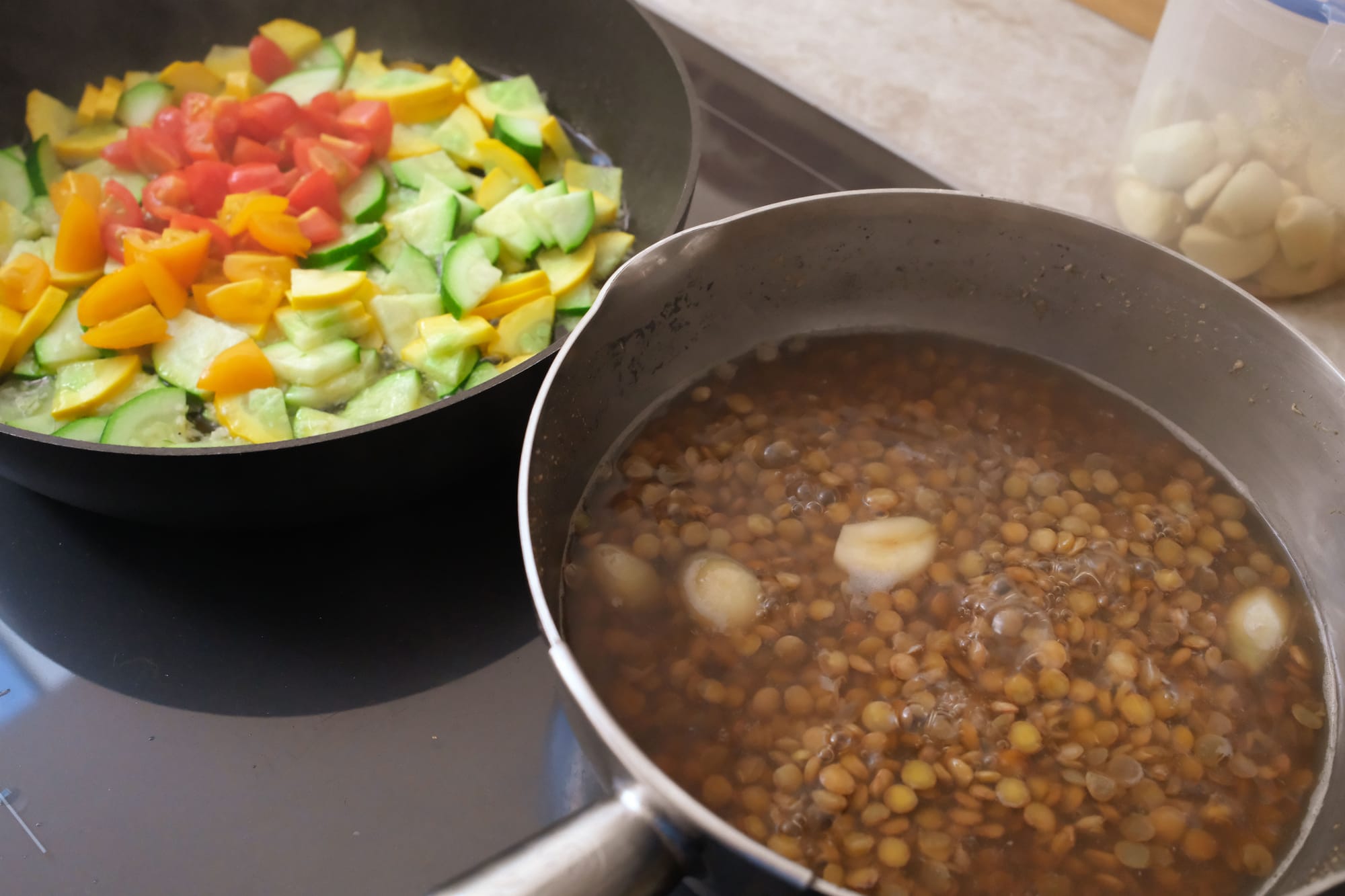
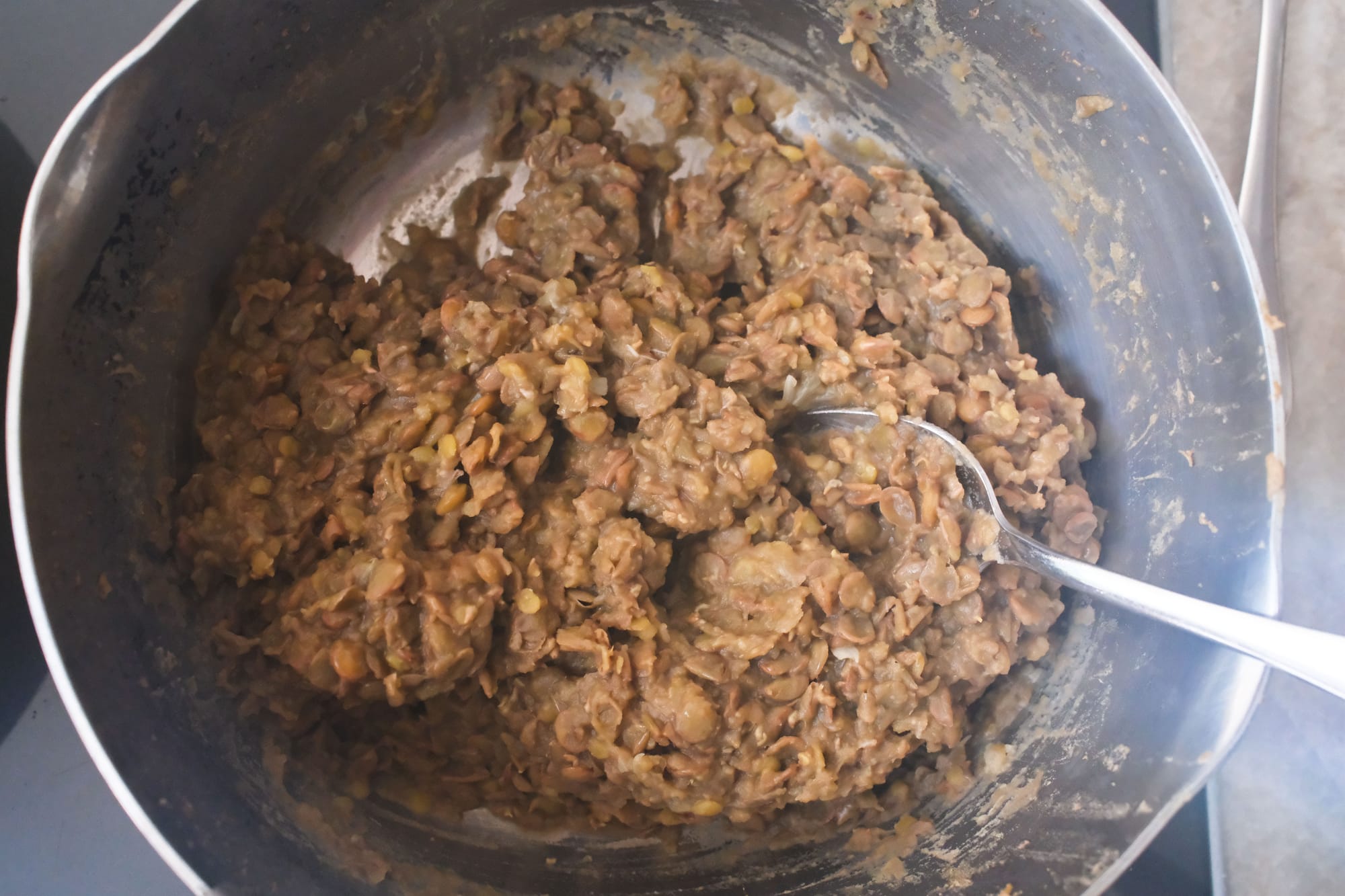
Lentils – I cook green or brown lentils in water with peeled garlic cloves until soft, using 3-4 cloves of garlic for one cup of lentils. When cooked to the point that most of the skins have just burst but each lentil is still holding its shape, drain and rinse with some water to take out some of the sludge. Then use your muddler to smash to a lumpy texture where each individual lentil has its skin broken (this should be really easy to achieve if you have cooked the lentils until they are sufficiently soft). Add extra virgin olive oil until it glistens and when you taste it the texture is soft, not dry and claggy in any way, and you can taste the fruitiness of the oil balancing the earthiness of the lentils – this is to say you probably should add more than you initially think.
Beans – I cook these from dried. Most jarred beans I’ve looked at include salt and so cooking your own ensures you can be salt free. Mostly I use white beans – alubia or cannellini, cooked with some onion and garlic in water, and then mashed up. Cooking beans is easier than you think – soak overnight and then cook in a saucepan on the hob, or in the oven. This way will help you get to the texture you want – fully soft, skins mostly starting to break but beans holding their shape. If you want more beans in your life – and this is often cited by credible medical professionals as the simplest way to make the biggest positive impact on your health – I would recommend getting a pressure cooker, either stove top or an electric one like an Instapot. If you do this, you can cook your beans without pre-soaking but you will need a bit of trial and error to work out your cooking time for your chosen bean. I find that I get the most consistent results by (i) buying the same brand and kind of bean, (ii) pre-soaking for at least six hours, (iii) pressure cooking. As you experiment with your cooking times, undershoot at first. If you need to you can put the lid back on and it will quickly come back to pressure and you can give it a few extra minutes. I’ve just cooked a batch of alubias which took 14 minutes at pressure, after an overnight soak.
This may sound quite involved, but doing a big batch takes the same amount of time, so in one cook (five minutes to soak, less than one hour's cooking during which you can do other things, and five minutes to mash) you can easily get three months' supply to have beans three times a week with not much effort.
When the beans are cooked, I drain them, mash the garlic and onion fully, and then roughly mash the beans, again ensuring that each bean has its skin burst. Generally I mash them with a little homemade chicken stock but don’t worry if you don’t have this – despite the craze for bone broth, the prosaic reality is that it is the humble bean which is giving most of the benefit here, and your baby’s collagen is probably in the best shape it will ever be. I will post in the next few weeks on some staples like stock and sauces you can batch make if you have time to go to the next level. We've also given him black beans when we've cooked these for us, and they go down very well. Chickpeas work well in hummus, but need lots of sauce and fat to stop them being mealy.
Rice – at first I overcooked rice to make it a bit soft. Now he’s better with textures, I just cook the rice in the regular way and freeze it in portions. One rice cup of rice (smaller than a standard measuring cup) provides about 15 portions. I’m cooking white rice – it is possible to overdo the fibre and UK NHS guidelines suggest mixing wholegrain and refined grains, so white rice balances the lentils and beans he’s eating.
These are the three items which we use on rotation and try to keep stocks of in the freezer, together with banana porridge that we batch make and freeze, so that breakfast is also really quick to get on the table.
The main other carb we give is pasta – buying short vermicelli pieces usually used in soup, as they cook quickly to a soft consistency and don’t need cutting or mashing up in the way that larger pasta shapes do. We have given him some potato when we’ve had it, mashed up with some butter or creme fraiche, but wouldn’t cook this for him specially as other carbs offer more fibre and protein. We had an early try at sweet potato and it was one of the few things he threw up, probably because we got the texture wrong (too dry), but might try this again.
The Protein
If you’re serving lentils or beans, and to a lesser extent pasta, you’ve already got a head start on protein from the base, but a range of proteins is important with all that crazy growth going on, and so adding to that makes sense. If we are having meat or fish, we usually save some of that, cooked without salt, to add to the baby dishes. However we don’t eat much meat and fish at home, and so we have options for the baby that are easy to add.
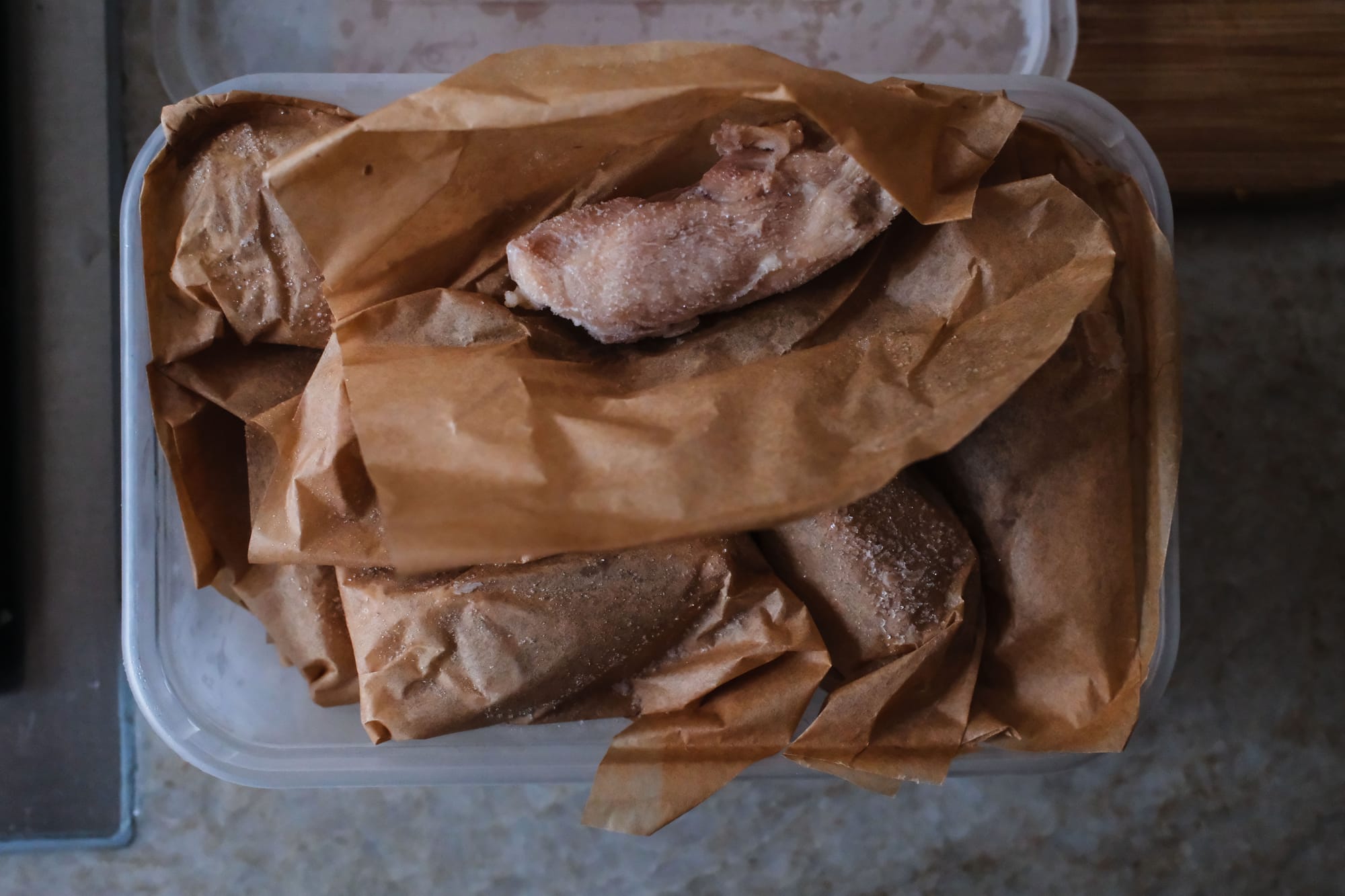
Poached chicken thighs (more fat, more flavour than breast) are cut into portions, each wrapped in baking parchment, and frozen in a box, and the same is done with salmon or trout (covered and cooked in the microwave). These can then be defrosted in the microwave, minced up and added to the dish. The cooked chicken can also be torn into strips as a finger food.
Tinned fish – tuna, sardines, mackerel – is another great option, but avoid fish in sauce as this will likely have salt, and look for just fish in oil or spring water rather than brine.
The other big sources of protein are eggs and dairy. We give eggs as a boiled egg eaten as finger food, omelette strips with veg inside as finger food, or as a scramble with other ingredients in it – there’s more on how it comes together in the examples below.
Dairy is a great way to include protein and fat – which brings us to…
The Fats
Fat is a vital nutrient and it is a really key part of making dishes easy to eat – by getting to a good unctuous texture – and also it makes them delicious, particularly when you can’t use salt or any salty ingredients like soy, fish sauce and other great ingredients we rely on to deliver flavour in our regular cooking.
The key fats I keep on hand:
• Unsalted butter
• Extra Virgin Olive Oil
• Creme fraiche (stable in cooking, and a tub will last for weeks in the fridge, so super economical and efficient)
• Mascarpone or mozzarella.
Both of these cheeses are naturally free, or almost free of salt, but do check the label. For mozzarella I can usually find fresh balls of mozzarella with 0.2-0.3g of salt per 100g, which I consider low enough to give him in small quantities. Always check the label first and make your own choices – I feel ok adding a small amount of mozzarella to some lentils, but wouldn’t put it on bread, which itself is going to have a small amount of salt in it.
Avocado is another great source of fat and lubrication which also brings great flavour and ticks the vegetable box as well.
The Vegetables
There are a few ways in which we prepare and use vegetables.
• As much as possible we just take some of the vegetables we’re cooking and eating and keep some aside, ensuring of course that we’ve cooked them without salt.
• Some vegetables work well as the finger food item – cucumber, quartered tomatoes, cooked green beans, sugar snap peas and broccoli florets.
• The vegetable element is a great route to add flavour and sauciness to the dish. Some of his favourite things include a vegetable curry in a tomato and ginger sauce, and a simple sauce of ripe tomatoes cooked with butter and garlic.
• Cooked onions and leeks add great flavour and I have cooked leeks in olive oil or butter with nutritional yeast added, and frozen these in ice-cube sized containers to have little flavour (and nutrition) bombs to add into dishes.
• Steamed or blanched green veg. The time-saving hack here is to cook only a couple of times per week. Veg which has been steamed or blanched and cooled down will happily sit in the fridge for three to four days, and can then be warmed up in your chosen fat and added to a dish as you prepare it each day.
• Sautéed vegetables (courgette, onion, tomato, leek, fennel) will easily last two to three days in the fridge, and you can also freeze portions of it. So make batch cooking your friend here: dice a medium sized courgette, 3-4 tomatoes and some garlic and sauté in olive oil. This will give you five servings, some of which you can freeze.
• Frozen peas and spinach are another time saving hack – cooked from frozen with some butter or olive oil, and in the case of peas, crushed up. Make double what you need and keep half for tomorrow in the fridge, but generally don’t refreeze previously frozen veg – it’s not unsafe if you’ve cooked it between the freezings, but the texture will suffer.
• Tinned tomatoes cooked with butter and garlic takes less than 10 minutes and from one tin you can probably freeze four portions and have enough for the next few days in the fridge.
The aim is to have easy ways of adding cooked and saucy veg to each dish, but to minimise cooking of fresh veg to a couple of times per week, with a few quick cooks of frozen veg in between.
Creating Dishes
Most babies this age will eat everything, but you can see preferences. Whilst they appreciate flavour, my sense is that getting the texture right is more important at this age, and then from an overall satisfaction perspective you want to make sure they are getting a good amount of carbs and protein across the day.
When I’m creating a dish for us to eat, I’m thinking about flavour and balance first and foremost. You can free yourself from this when creating the dishes for your kid – think about what ingredients you want to feature so that you are (i) creating balance across the week in their diet and (ii) using up what you have on hand to make it easy and efficient. When you’ve worked out the ingredients, then think about the texture, and then you can add a bit of flavour at the end.
I will usually start with what veg or protein to feature, as this is most often the fresh item from the fridge and so we want to use what we have efficiently and avoid food waste. If we don’t have any meat or fish, I’ll consider something with an egg, or some meat or fish from the freezer, or opening some tinned fish. If we have veg in the fridge, I’ll start with any that is already cooked in something (for example some spinach sautéed in olive oil and garlic, or some cauliflower in a tomato curry sauce), and if there isn’t any then any plain cooked veg. If there isn’t any of that, then I’ll cook some fresh veg I have on hand, or use frozen cooked veg or frozen peas/frozen spinach.
The final element is then thinking of the base and fat – sometimes things seem to naturally go together. Rice works really well with egg and butter, for example. But often with the base I’m thinking about balance – did he have porridge (fibre rich) or egg (no fibre) for breakfast? What did he eat yesterday? If in doubt, go for the beans or lentils to keep fibre intake high, as it really doesn’t matter if your chicken and spinach is going with rice, beans or lentils.
The added bonus is then flavour – to keep exposing them to foods and tastes, I will sometimes add roast garlic, smoked paprika, pepper, fresh herbs like basil, or a squeeze of citrus.
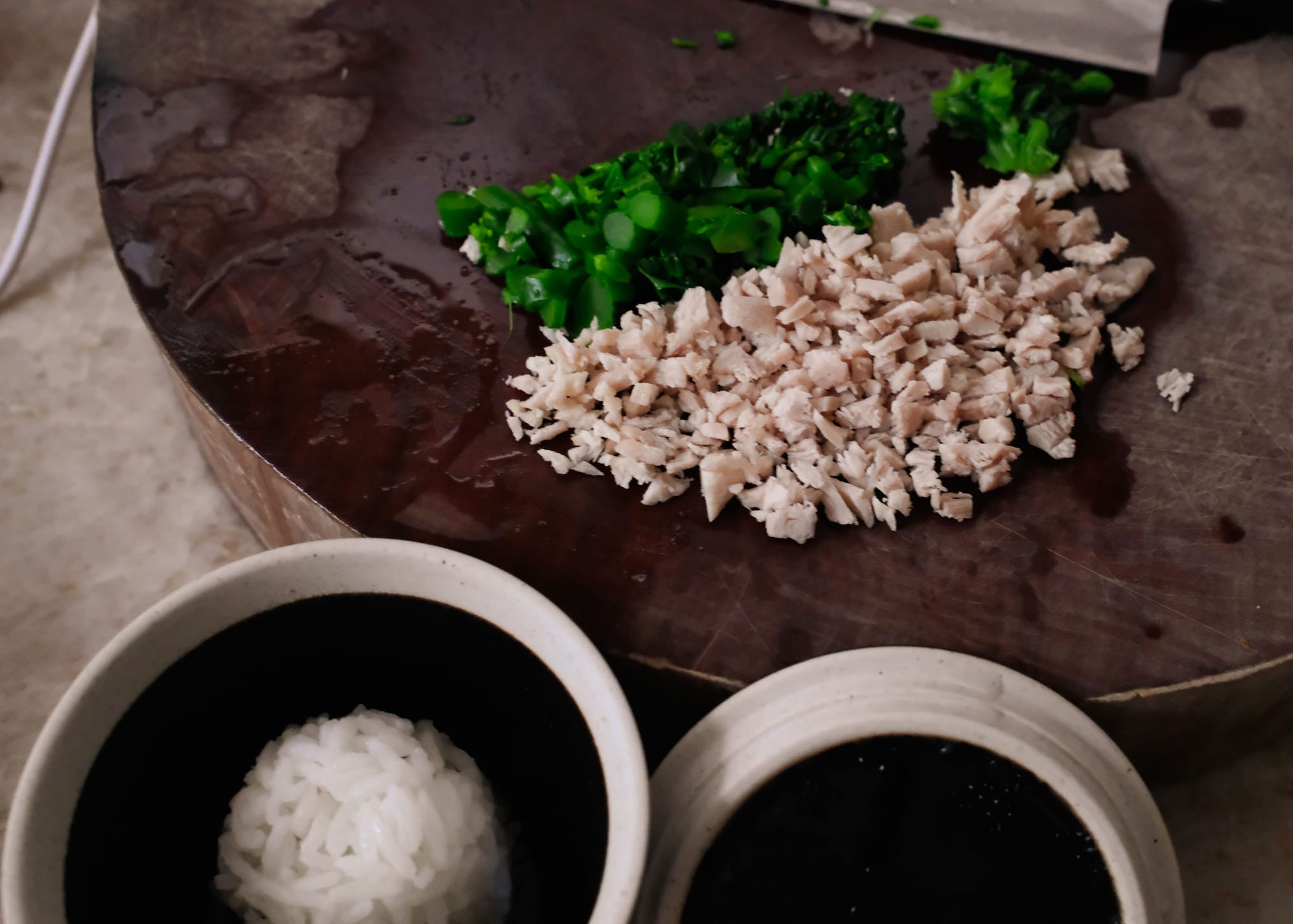
As a general rule, I’m looking for the protein and veg to be equal quantity to the 30ml portion of cooked rice/beans/lentils. Texturally I want it to be quite saucy, with a variation in texture so not every mouthful is the same – you’ll observe their development and when they can cope with the different textures and it’s really important that you provide this variety as they grow so they can develop their eating skills.
Examples
Here are some of the things he’s eaten recently and enjoyed.
The System in Summary – with Example Meals
Base: keep supplies of cooked lentils, cooked beans and cooked rice in the freezer. Have dried short pasta on hand which can be cooked quickly.
Protein: share some of what you are eating when cooked without salt, have cooked chicken and fish in the freezer, keep a supply of tinned fish, and use lots of eggs.
Fat: keep extra virgin olive oil, unsalted butter and creme fraiche on hand. If you can find low or no salt mozzarella and/or mascarpone have this too. Avocados are a good option too if you can find ripe ones at a reasonable price.
Vegetables: batch cook by steaming, blanching or microwaving and then cooling quickly in iced water and you have veg for a few days. Cook some of this in butter or olive oil and always make at least two portions worth. For bigger batches, freeze in portions. Keep frozen peas and frozen spinach in the freezer. Make simple tomato sauces in bulk and freeze / refrigerate to use as needed. If you have time make veg curries and use this as the veg element
Combine these building blocks to make dishes with a juicy, unctuous texture, with good textural variation according to what your baby can deal with, looking to increase this variation over time.
This should be achievable with one longer cooking session per week – say 60-90 minutes to stock up on your base and cooked veg, one shorter cooking session midweek to restock veg and proteins, and then aiming for 5-10 minutes per meal.
Here are some of the recent meals we've made for him using the system:
• Lentils (freezer), trout (cooked in the microwave and frozen in portions), peas (cooked from frozen), unsalted butter – all cooking done in the same bowl in the microwave. On the table in five minutes.
• Pasta with tomato butter sauce – chopped up four tomatoes (but tinned would have been fine), cooked in unsalted butter while the pasta cooked, with mozzarella added. On the table in eight minutes.
• Scrambled egg with tomato – using the other half of the tomato above, with a beaten egg and some milk added to the pan. Another five minute meal.
• Beans (freezer), lamb (leftover from our dinner, finely chopped), spinach (previously blanched and in the fridge), leek with nutritional yeast (freezer). You’ve guessed it – ready in five minutes, all done in one bowl in the microwave.
• Lentils (freezer), courgette and tomato (cooked in olive oil until soft), creme fraiche – this took about 15 minutes, but that made sufficient courgette and tomato for another four meals, some kept in the fridge and the rest frozen.
• Rice (freezer) and egg with butter – super quick and always goes down well. Defrost the rice while you melt a generous teaspoon of unsalted butter in a pan. Add a beaten egg and cook to a soft omelette / firm scramble. Add in the rice and mix. You can add in cooked veg, or serve some finger food on the side like broccoli ‘trees’.
• Rice (freezer) in tomato, garlic and olive oil sauce with finely chopped beef (a small section of steak cut off before I cooked for us, finely diced and cooked with the tomato). This took 15 minutes but that included making a batch of tomato garlic sauce that will do four other meals.
The system has been a big unlock for us. Where he can just share some of what we're eating we do that, but most of the time we cook from the core blocks we have, enabling us to feed him well with only a few minutes needed before he can eat, and so far he's eating well and thriving.