7. The beauty of a well-sauced dish
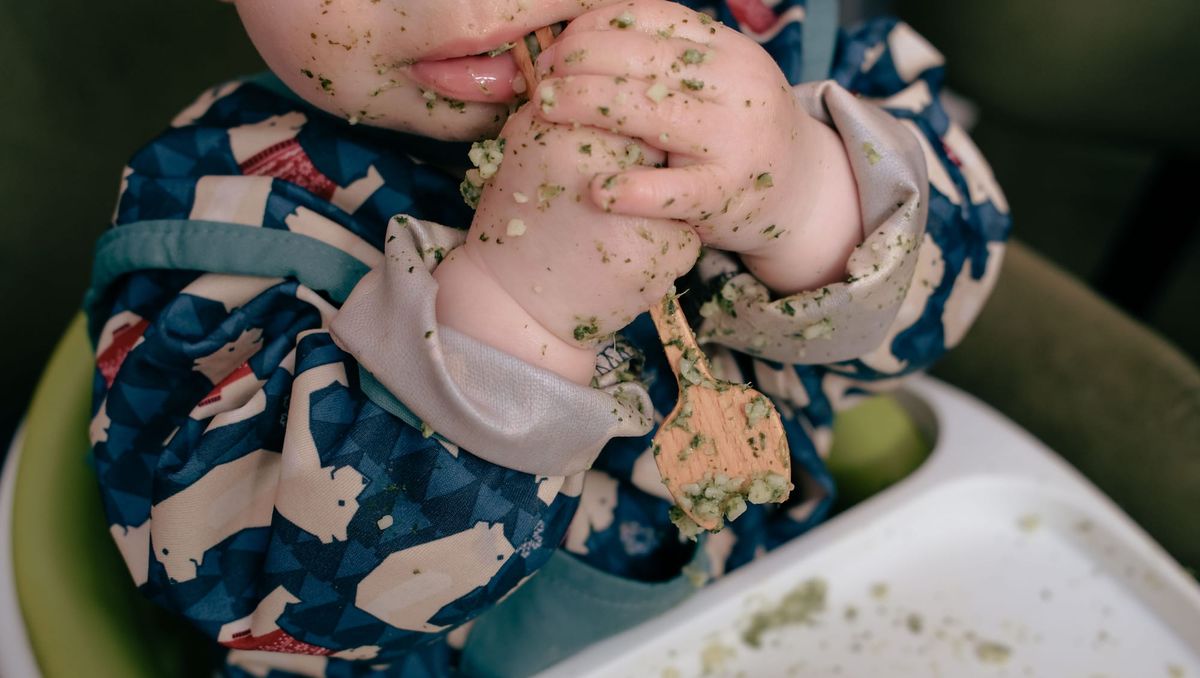
I had an idea – labelled in my head as The Sauce Project – where I would make one new sauce each week, with the best ones entering my regular repertoire. Sauce here would be quite a wide definition: salsas, moles, dressings, the chutneys of South Indian cooking, Thai nam priks would all count as a ‘sauce’.
The idea didn’t get much real life traction last year, somehow falling down the priority list below pregnancy, birth and keeping an infant alive. A burst of new year’s optimism: 2026 will be the year of The Sauce Project. I even contemplated starting an Instagram, envisaging the weekly #content of photos, recipes and the application of each sauce rated and reviewed.
However, reality. Even finding more of a parenting rhythm, and managing time between us better to ensure we each have free time without the kid, it hasn’t happened. I was busting out sauces already in my repertoire, but as February ended, I had only made one that was completely new to me: shacha sauce – a Chinese condiment heavy on dried shrimps, garlic and shallots, and great with hotpot/steamboat.
But in a twist, my desire for new sauces and the new task of feeding our child solids have started intersecting unexpectedly. It turns out he has a good appetite for sauces and it’s proving a great way to get a wide variety of foods into him at a time when he’s still eating spoonfuls rather than platefuls.
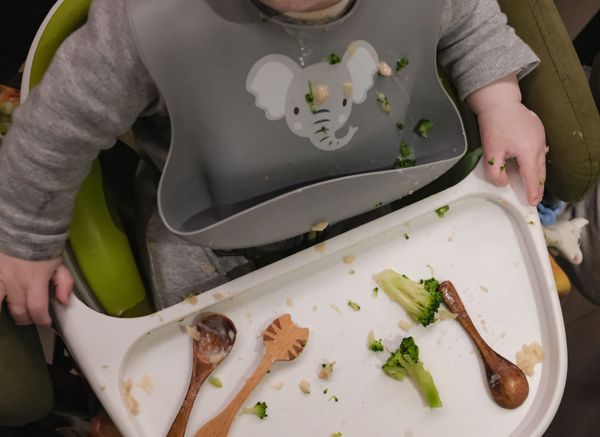
Among the nonsense being served to me on social media about weaning is this idea that you sometimes have to feed babies the same ingredient 10 times before they accept it. In the first few feeds, many foods would elicit a look of disgust, but quickly we realised this was more about the shock of any taste beyond milk, parental fingers and Calpol, rather than any kind of real rejection of the flavour. While I’m already braced for a massive reversion to beige in a year or so’s time, right now his only real aversion has been based on texture, with a claggy sweet potato puree brought right back up. In general – and several parent friends confirm this – many babies at this age will eat anything.
The first weeks of feeding were really focused on getting him to understand how to chew, move food round his mouth and swallow. Our focus was on ensuring he didn’t choke. We worked through a staple diet of porridge, mashed up beans and lentils, and soft rice, with vegetables mashed in. But as his/our feeding confidence has grown, we’ve been able to make eating more of a shared experience, and now he’s often with us at the table, with a real interest in what we’re having. Whilst filtering out the salty and the choking hazards, we’ve been sharing more of our food and it’s been going really well.
His appetite seems to be increasing alongside the range of foods he’s trying and his acceptance of tastes has been really good – and so now I have a new guest at the table motivating me to get more sauces into the repertoire.
In the adult world of eating, we lunched recently at a new Mexican spot in London called Cometa. They served scallops with a guajillo chilli salsa made from roasted chilli, onion and garlic. It reminded me a little of a really good Thai nam prik pao, with a jammy intensity but not too sweet. As I often do, I took the inspiration and made some at home, subbing in mulatto chilli as that’s what I had, and served it in a mushroom taco. Conveniently mulatto chillis are much milder than guajillos. With nearly a jarful still in the fridge, we had some with rice and black beans, and fed some to the boy, who ate it enthusiastically. This then became a way to add some variety to the rice, bean and lentil purees.
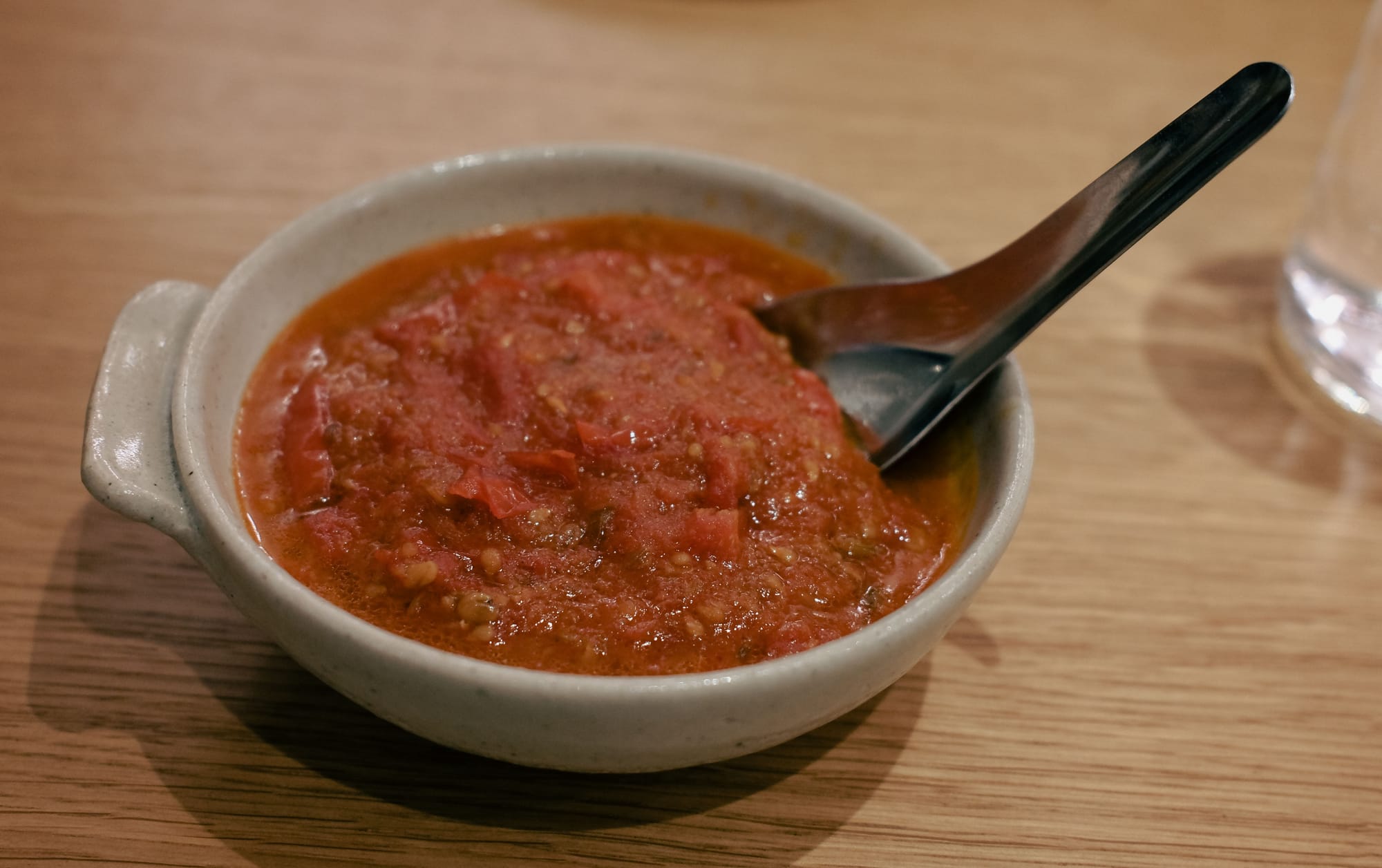
Another night hosting, with a selection of South Asian dishes including a pulao of rice and peas, served with a tomato chutney. Whilst easy to make, this chutney has a complex flavour including ginger and garlic, mustard, cumin, fenugreek and fennel seeds, turmeric, vinegar and even a touch of chilli. He was awake through most of this evening and tried the chutney with some rice, and came back for several more spoonfuls, and ate through the leftovers with beans, and with eggs in the following days.
Probably his favourite dish so far – based on how enthusiastically he finished it – was orzo pasta with a sauce of peas, onions, garlic and kale, cooked by his mama. He ate way more of this than a simple pasta with tomato puree and unsalted butter made especially for him. Another night's salsa verde (avocado with coriander, sesame oil, sherry vinegar and garlic) was happily eaten for the next day's breakfast with scrambled eggs.
We’ve found a happy place where he’s eating a wide range of food because he’s eating much of our food, slightly adapted to work with his way of eating and stage of life. It adds a fun new angle to our meal planning to ensure that much of what we have will work for him, and the more we do this, we’re minimising the additional work of producing two sets of food each day.
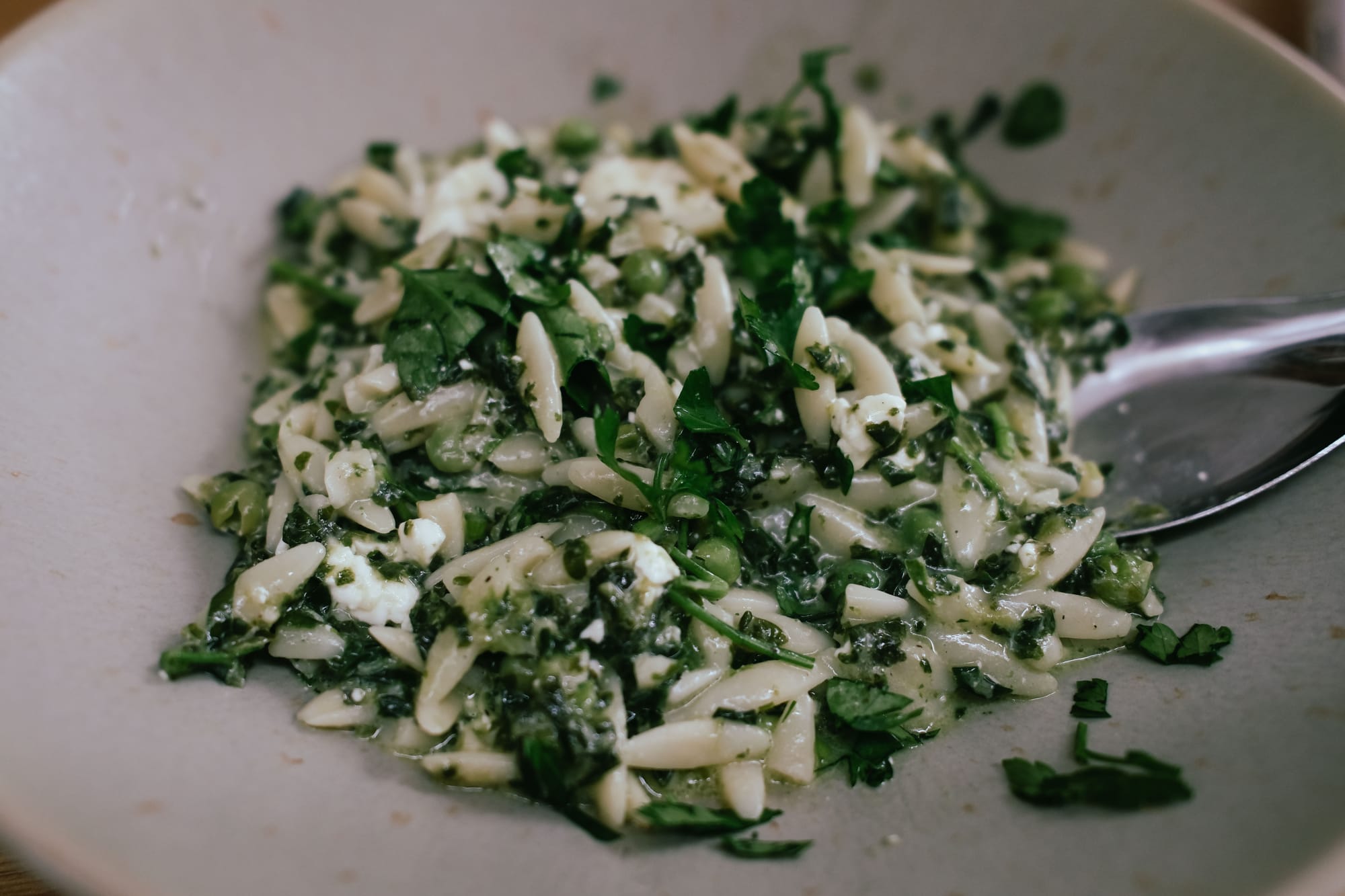
Much as I would love to see this as the development of a broad appetite, and the early emergence of the little foodie that we really want to raise, I do know that this stage of eating is much more about his cognitive and physical development, and in watching that I’ve discovered an even deeper pleasure than the idea of an adventurous infant eater. Seeing the leaps and bounds of progress in a child you visit often in their early years is special, but getting the in-depth version where you experience almost all of their learning as it happens is a whole different level of wonder. I feel like I’m watching a mini-version of human evolution: trying hand movements thousands of times before the connections which offer some control start to be made; seeing the use of tools progress from anarchic to effective in only a matter of days; observing his realisation that he needs small pieces of food and working out that he can use his hard gums and emerging teeth to cut it up himself. Small tasks which were impossible on Monday can be mastered by Friday, and from a wider perspective he’s progressed from not being able to sit up in a chair to confidently picking up, biting, chewing and swallowing food in the space of about ten weeks. The couple of hundred hours we’ve spent watching, guiding, repeating and encouraging this have been fascinating and rewarding.
He’s not anywhere close to self-sufficient yet, of course. But he’s doing well in leading the feeding, with the parent loading the spoon and holding it near so he can grasp it and take it to his mouth. This has the added benefit of putting a little control over the amount of mess generated. He’s now really adept at finger food, and working out what he can suck, what he can bite and what he can just chew on to help those next teeth come through. As well as the big steps in feeding, he’s crawling and energetically pulling himself up to standing, burning huge amounts of energy and consequently his appetite is soaring.
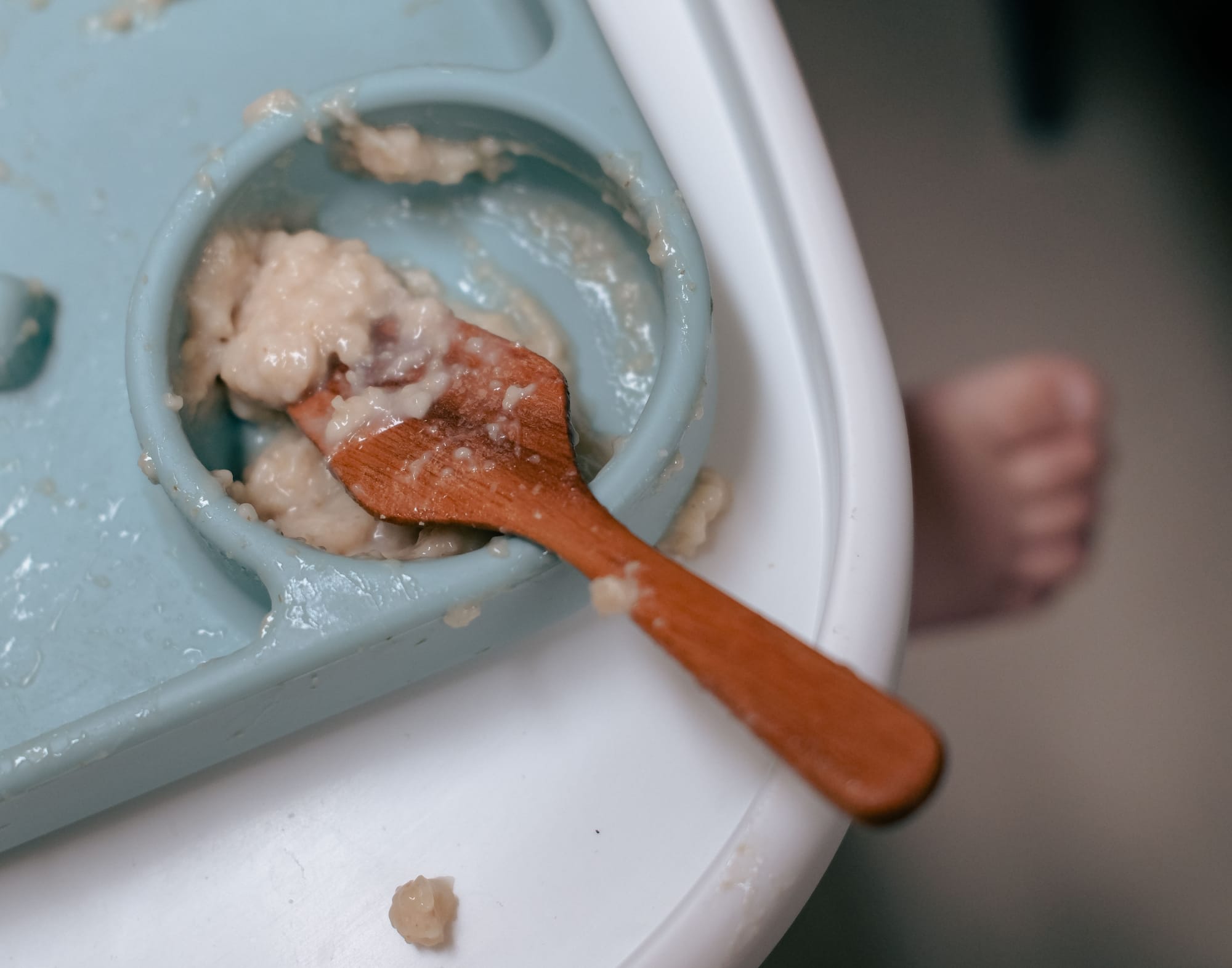
Meals are tackled enthusiastically and often, the amount of solids he’s eating is increasing daily. You might think the happy sounds and empty bowls are just a hungry, active infant getting fed, but a little part of me knows that it’s due in at least some degree to his inherited preference for a well-sauced dish.
Roasted Mulatto Chilli Salsa
Soak four dried mulatto chilli for half an hour, then drain. Peel and three small onions and four fat cloves of garlic. Quarter the onions. Toss these with the chilli in a generous amount of olive oil and roast, starting at 180ºC for 10-15 minutes and then reducing to 165ºC until the onion and garlic are very soft. Blend, adding more oil and if you need, a little of the water the chilli soaked in. If you’re not feeding an infant, taste and add salt. Great with scallops and mushrooms, chicken, and delicious stirred into cooked black beans and eaten with rice.
Tomato Chutney
(adapted from Camellia Panjabi’s 'Vegetables The Indian Way')
Roughly chop 12 medium sized tomatoes, removing the little bit of green stalk. Heat a couple of tablespoons of neutral oil, and when hot add a heaped tablespoon each of garlic and ginger purees, half a teaspoon each of mustard, cumin, fennel and fenugreek seeds. Add the tomatoes and cook down for five minutes, then add a teaspoon of turmeric powder and chilli powder to your own taste – I used half a teaspoon of a ground Kashmiri chilli. Add half a cup of vinegar and a little sugar to your own taste. Cook down for between 10 and 20 minutes (it will depend on how watery your tomatoes were) until the flavours are well developed. Add salt if desired.