5. Feeding intentions and early reality
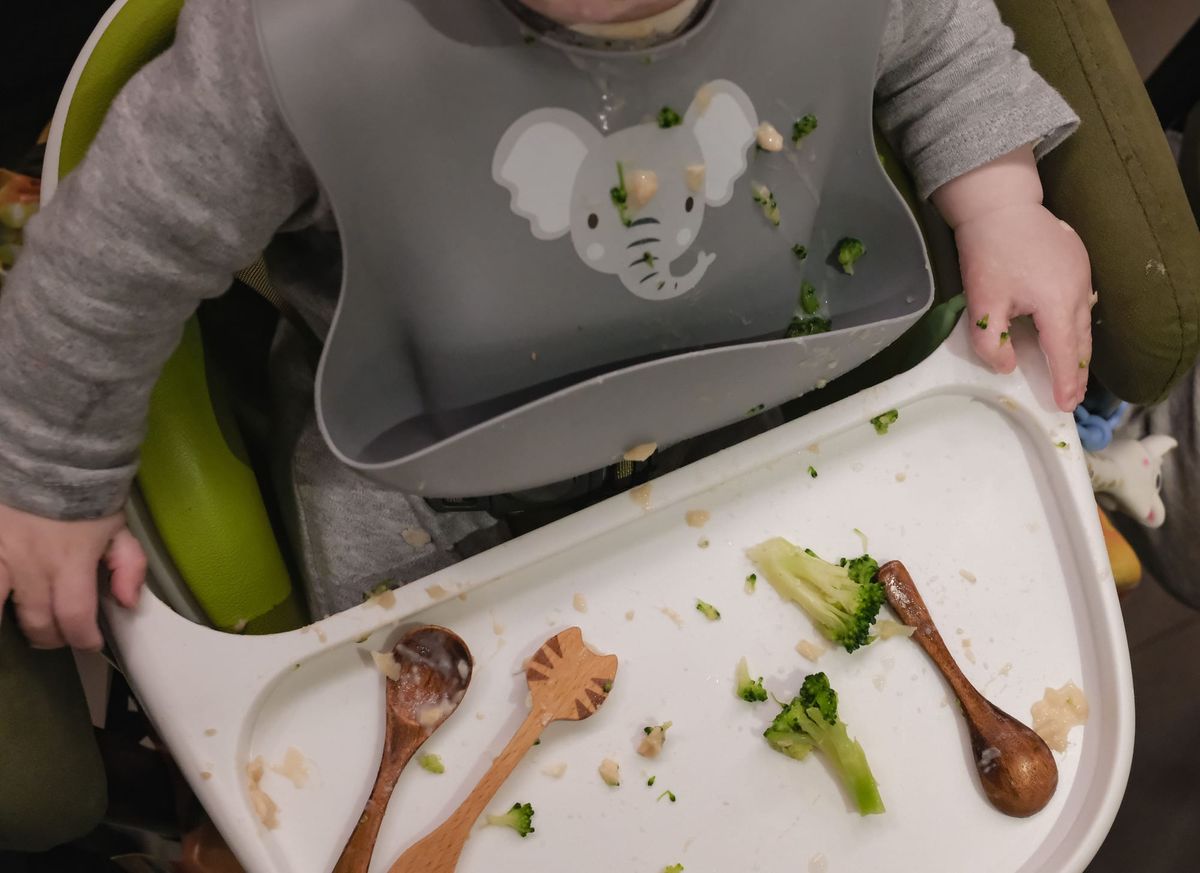
We have started weaning our boy. We initially tried just before he turned six months as he had the sitting up part nailed, was starting to show an interest in our food, and demonstrated an unerring ability to put anything in his mouth.
Life in our house revolves around the kitchen island, three bar stools at a raised counter on one side, hobs and main food prep area on the other. A booster seat puts him right in the front row seat when I’m cooking, and he’s right between us when we sit there to eat.
As food plays such a big part in our lives, we both desperately want him to have a great relationship with food – finding pleasure in equal measure with sustenance, curious and delighted to try new things. Everyone tells us that the relationship between the parents’ eating habits and the child’s is as often inverse as linear, but that doesn’t extinguish the hope that we can have our love of food flow down a generation.
Here are some of the main ‘intentions’ we aligned on, and a first progress report on how it’s going after the first six weeks or so.
Baby-led in general, but not in any way militantly
As he’s curious and good at getting things (anything) in his mouth, a baby-led approach seems natural, and if it can minimise the amount of time we spend spooning puree into his mouth that feels like a plus
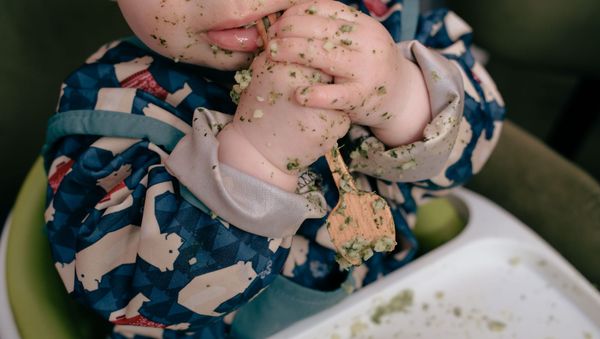
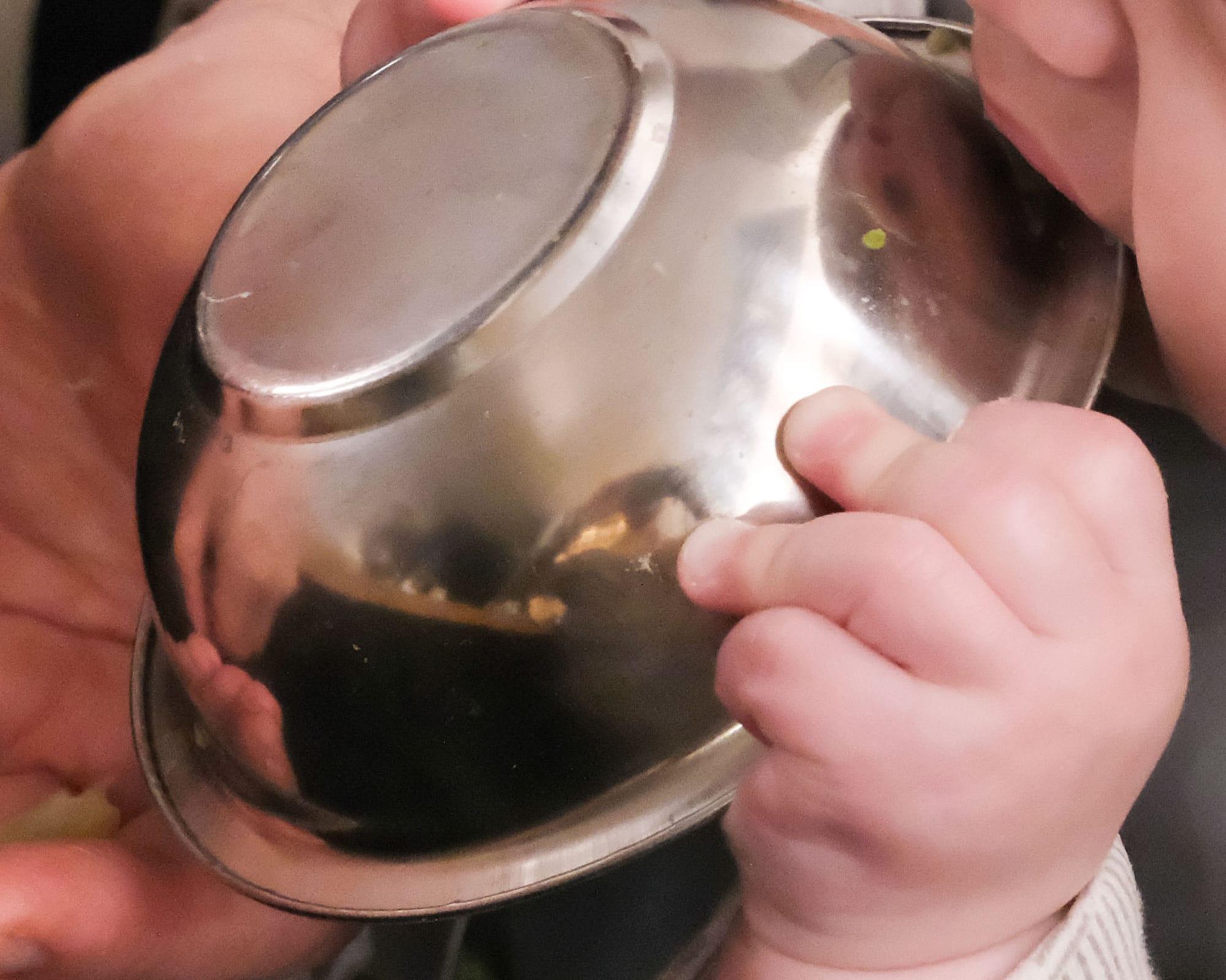
Early days, but it is showing some signs of promise. We have not been militant, and sometimes we do spoon feed him when we want to make sure he actually tries something, and when we need to ensure exposure to allergens. He does prefer picking up the spoon himself, and while he’s good at getting it to his mouth, the movement usually rotates it upside down. The spoon makes it to the mouth but the food often doesn’t. He’s often more interested in the plate and bowl than the contents, but he’s engaging with the process.
Lead with vegetables rather than fruit, and remember carbs are good
The intent is to delay the onset of a sweet tooth until he’s familiar with a range of foods. With the constant growth and the energy he’s burning from crawling, twerking and flapping his arms like a penguin, we have to remember that while we try and make sure we don't live off carbs, the same doesn't apply to him.
We started with avocado, then broccoli which he played with, squished and mostly dropped on the floor. The bits that made it into his mouth caused quite the grimace. Same with carrots. Sweet potato makes him gag (lesson: mix it with more milk to stop it clagging). We did end up trying banana quite early on which went well. Pear elicited mild indifference. Carbs are the winner though – congee and bean puree have been the foods where he came back for several spoonfuls and showed some signs of swallowing. The carb preference is strong.
The additional complication of this early weaning is that he's teething – every day they feel more prominent in his lower jaw but still don't poke through. It's like he's learning a vital new skill on equipment that is about to get a massive upgrade. Chilled cucumber batons have proven to be a real winner, as he get gnash on something with some flavour.
Family mealtimes
Try and eat together as a family so that we can model good behaviours and there isn’t sole focus on him and how much he’s eating.
This has taken a while to get going. And the first time was the polar opposite of this as two parents excitedly surrounded him for this landmark, taking multiple photos and capturing videos for eager grandparent. The combination of the milestone moment and parent anxiety about choking ensure he had the full undivided attention of both of us, scrutinising every movement, parsing every expression.
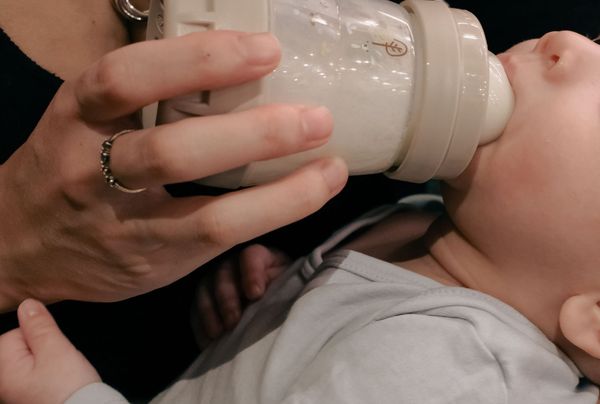
We perhaps started weaning a little too early. He wasn’t super-interested, and so we didn’t get into a routine of trying something every day. Then he and we got sick and it felt like we lost February to a never-ending cold. His appetite dropped by half. He was so full of mucus that swallowing became a challenge and he frequently coughed up a mix of mucus, milk and bile. His weight dropped and clothes which had been about to drop out of rotation for being too tight started to look baggy on him. Weaning efforts got suspended for a little while.
As with many things, your baby shows you the way. Often in his booster seat alongside us as we ate, his interest in what we were having suddenly came back, grabbing at bowls and trying to intercept spoons and glasses on the way to our mouths. So we have now started to get into a better rhythm of all eating something together.
Work towards shared food rather than baby food
This is the ambition but it scares me while we need to watch his salt intake. Refraining from using salt in cooking and adding it at the end is doable if not ideal. But so much of the salt in the food I cook comes with flavour: miso, fish sauce, soy sauce, anchovies, parmesan, pickles and ferments all bring salt alongside bags of flavour. Even with the white stuff, I wonder about the impact removing salt from the process of caramelising onions will have on their flavour and the sauces you build on them. We make chicken stock ourselves and I never salt it, but for vegetable stock – used to cook dried pulses every week – I use Kayanoya dashi which has salt in it.
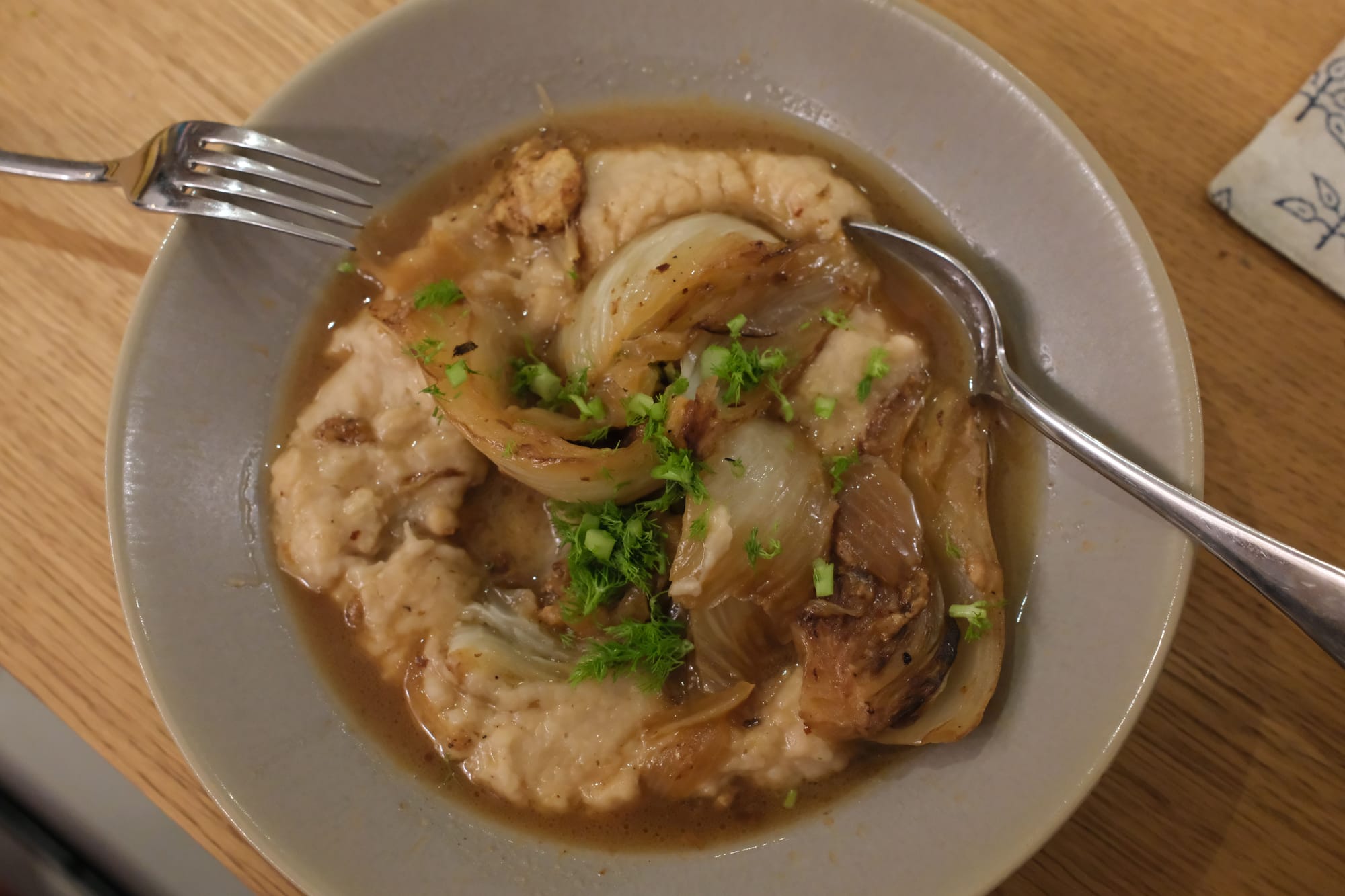
So far this hasn’t been a major issue as we’re in early stages of experimentation and as our appetite for carrot puree is limited, we are mostly cooking just for him. We saved a piece of frittata with spring greens and tried this. No egg reaction (big tick), but I think the grainy texture of cold frittata mixed with milk was – understandably – pretty unappetising for him. I did cook a batch of beans this week in just plain water and the difference in taste was clear. But that chunky puree of the beans has, alongside congee, been one of the biggest successes so far. Seeing him eating something I’d cooked – as simple as some beans crushed up in some milk – and come back for more is, for now at least, ample compensation for under-seasoned beans. Ours also got served with fennel braised in parmesan broth, so the flavour was pretty good for us in the end too.
Don’t hold back on flavours
A big one. Time will quickly pass to the point where we progress from zero salt to a little salt, and will progressively normalise. A bigger impact on shared food would be multiple years of holding on the garlic and spices. There are few things that excite me as much as a sauce bar, but this is very much a case of ‘more is more’ rather than rescuing bland food, so I’m hoping we can have him eating the flavours we like as early as possible.
Very early steps on this. Carrot and milk mush causes his face to pucker right now, so we are focused on getting some basics of getting food into the mouth with at least some of it swallowed. But then last night we did give him some pak choi with garlic – his head shook like he’d touched his tongue to a battery. He didn’t reject it, and took another piece. The flavour journey has begun.
A fun experience centred on him is more important than any intention of ours
Desperate as I am to have a fully fledged foodie before he can walk and talk, I’m also reminding myself that every child is unique and what might seem to be good ideas in general might not be right for him. His nutrition at the moment (seven months) still comes from milk, with anything from other sources a bonus. Plenty of happy, healthy kids eat nothing but beige food for years and thrive on it. I’m desperate for him to have a love of food, and reminding myself that our role is to open up doors, not to force him through them.
The journey has started. It's fascinating and mostly very messy so far. Until the next mealtime...